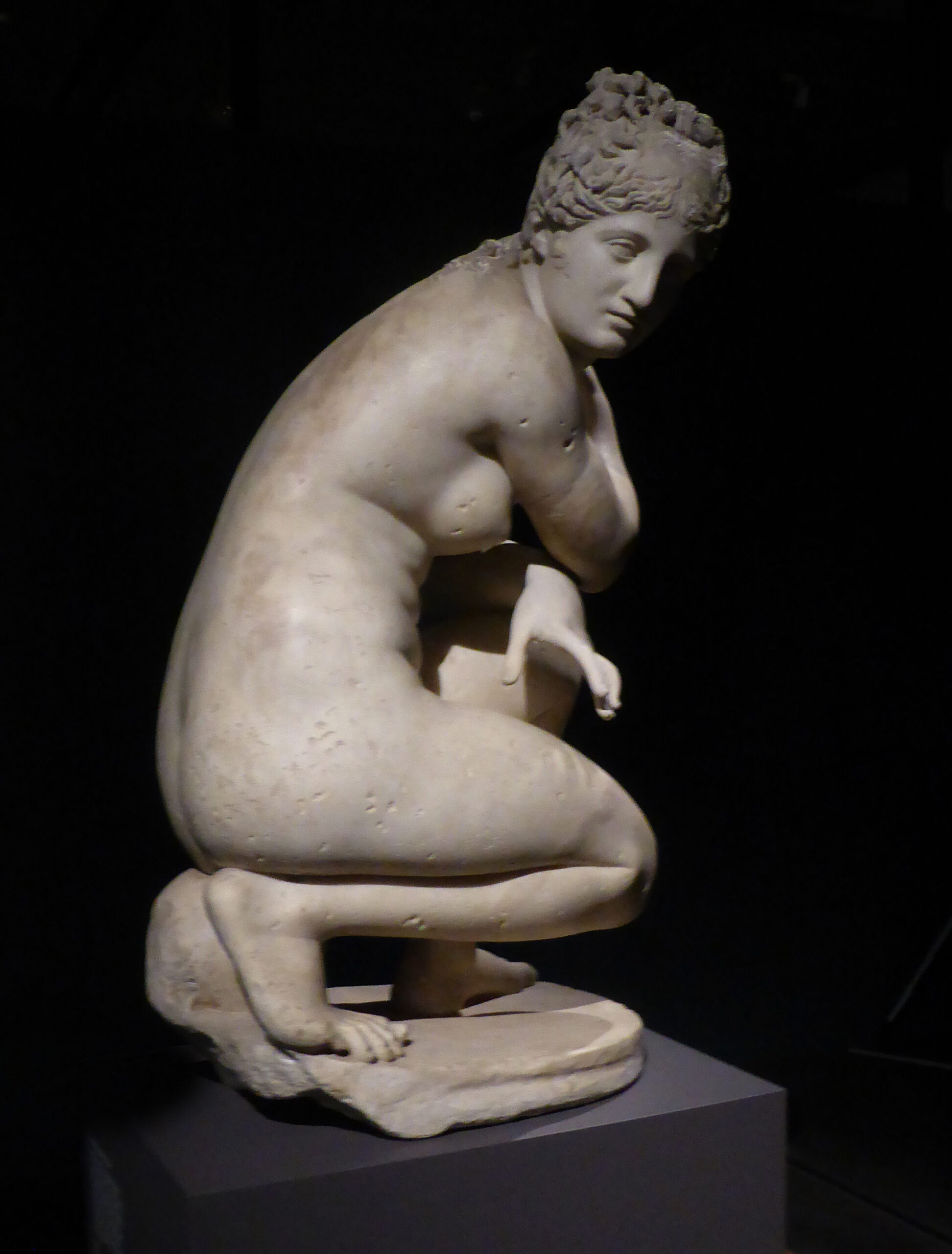
The picture above is known as the Lely Aphrodite and is a Roman copy of a Hellenistic original. It was first recorded in 1632 in Mantua, but Charles I who was a keen collector of antiquities, purchased it and brought it to England. But when Charles I had his head chopped off, it was sold off and was eventually purchased by the painter Sit Peter Lely. However on Lely’s death it was purchased by Charles II. Eventually, Charles III, or his predecessor, gave it on a long term loan to the British Museum where it can be seen today by the hoi polloi. Those who object to naked women should avoid the British Museum.
The Greek revolution
There are three great revolutions in the world’s history. There is the agricultural revolution when man went from being an ever-wandering hunter gatherer, to settling down, for better or for worse, to be a farmer. The revolution was spread over a long period. Indeed, it is fashionable today among academics to say that it did not really exist, but it happened, even though it took many different forms in many different places.
At the othe end is the Industrial Revolution which took place here in the West. We are still living in the second part of the revolution, the computer revolution, but it has changed the lives of all it has touched.
But in between came another revolution that had equally widespread consequences. That revolution took place in Greece, and was the money revolution. This introduced an entirely new form of exchange which was not only vastly more efficient, but also introduced a vital element of choice into the lives of those who benefited from it. And from this choice came freedom.
It is a story dominated by two towns. On the one hand, there was Athens, the town that accepted money and pioneered new ways of living, inventing history and drama and philosophy, and most revolutionary of all, democracy.
And then there was the town that ostentatiously rejected money, Sparta. Sparta wanted to keep their neighbours in slavery and so they rejected money fearing that money would introduce uncomfortable concepts of choice and freedom, so they rejected money and with it culture and became uncultured warriors, good only at war.
The benefits of the market economy were spread widely, mostly by outsiders. The Macedonian king Alexander the Great, conquered the Persian empire, and introduced some of the benefits of the Greek revolution to the East. And then the Romans built up a great Empire based on the Greek foundations of the market economy.
The Roman empire eventually declined and fell, the market economy was largely lost, and Europe and the Mediterranean entered into a long, long Dark Age. But eventually the market economy once again crept into existence and the industrial revolution gradually emerged whose benefits we are still enjoying today. If we are to understand choice and experiment, which is the foundation of our industrial revolution, we must first understand how the Greeks invented money, which is the foundation of the choice and experiment that fires us all.
Start with Archaic Greece,
Revised: 2319th March 2021