Hannibal to Augustus
History and archaeology disagree
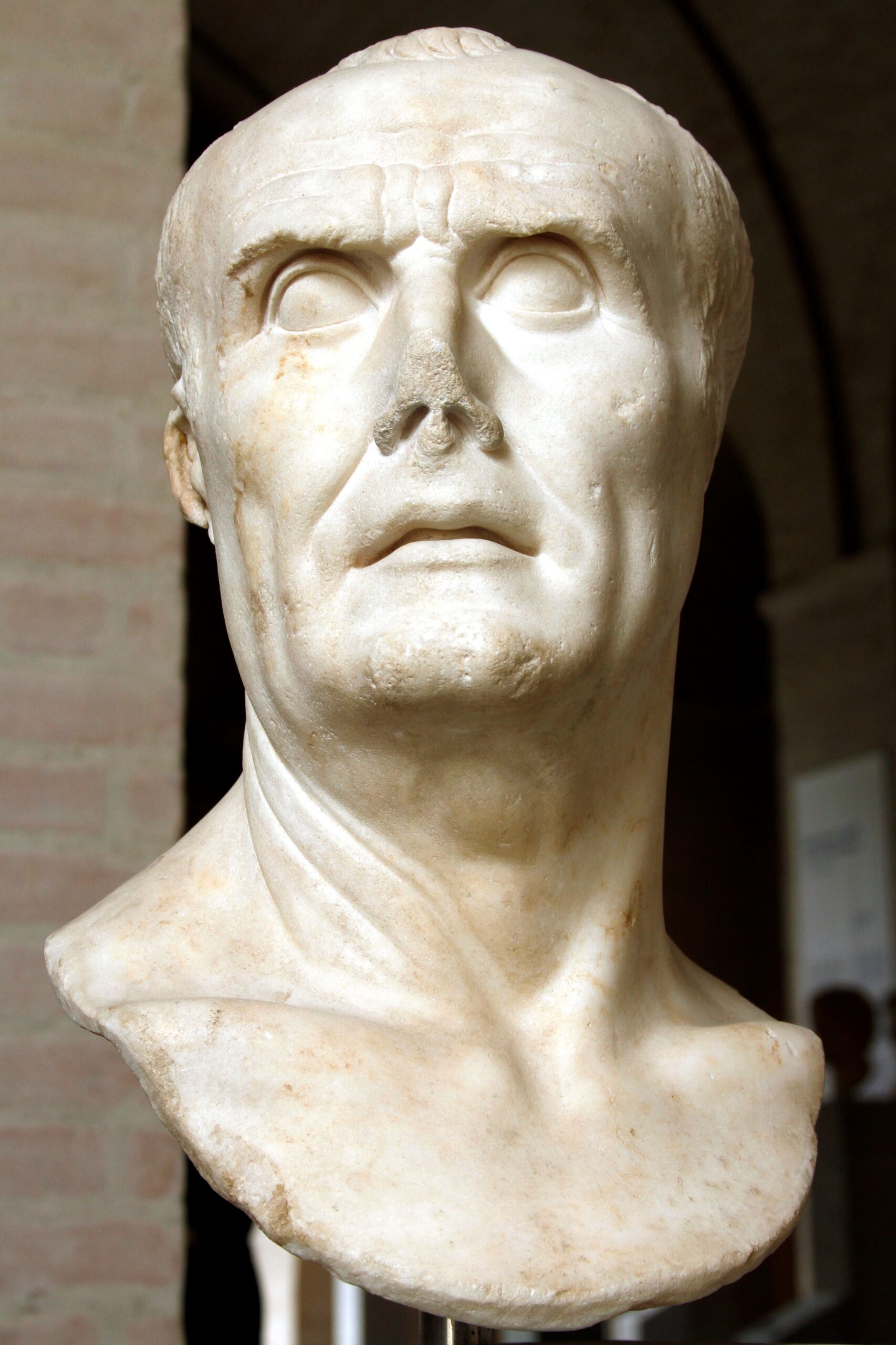
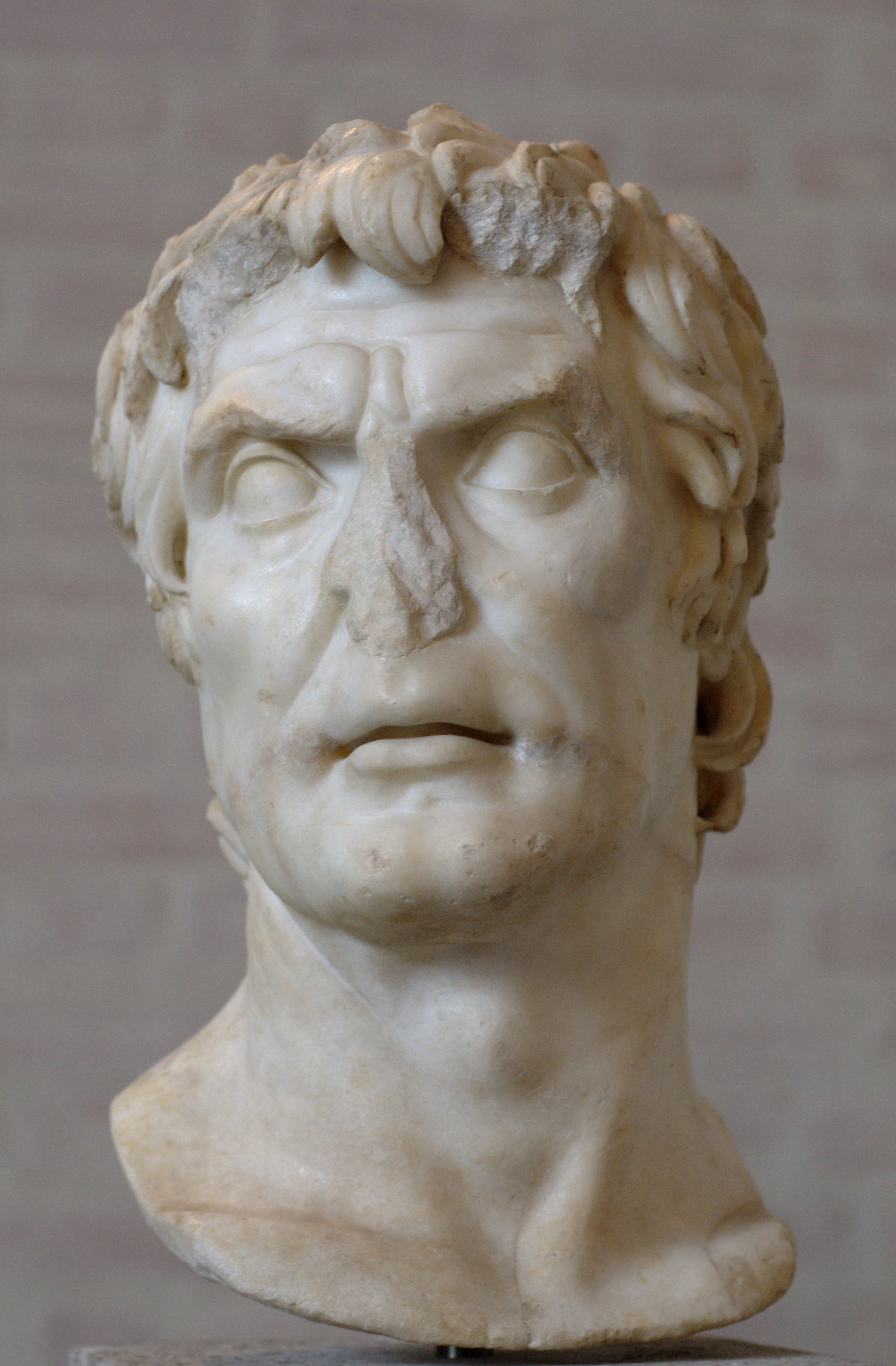
Two portraits of the Augustan age which are traditionally labelled Marius, left, and Sulla, right. The attribution of both is disputed, but it is thought that they were originally designed to be exhibited together.
The history of the next two centuries at Rome is one of those interesting cases where history and archaeology disagree. There are in fact three different stories. There is the story of Rome’s expansion, which sees a steady growth. With the defeat of Hannibal, Rome gained Spain as well, for it was in Spain that the Carthaginian empire was largely defeated. North Africa also followed, not indeed immediately, as peace was made with Carthage and it was not till 146 that Carthage itself was destroyed and North Africa became part of the Roman Empire. The same happened in Greece where ‘freedom’ was proclaimed in 200, but the Greeks misused their freedom and began fighting each other and so in 146 Rome came in and destroyed Corinth, and Greece was then put under Macedonia; and with peace came prosperity. And in Asia Minor, when the King of Pergamon died in 133 with no heirs, he left his kingdom to Rome, and Pergamon — essentially western Turkey — soon began a long period of peace and prosperity.
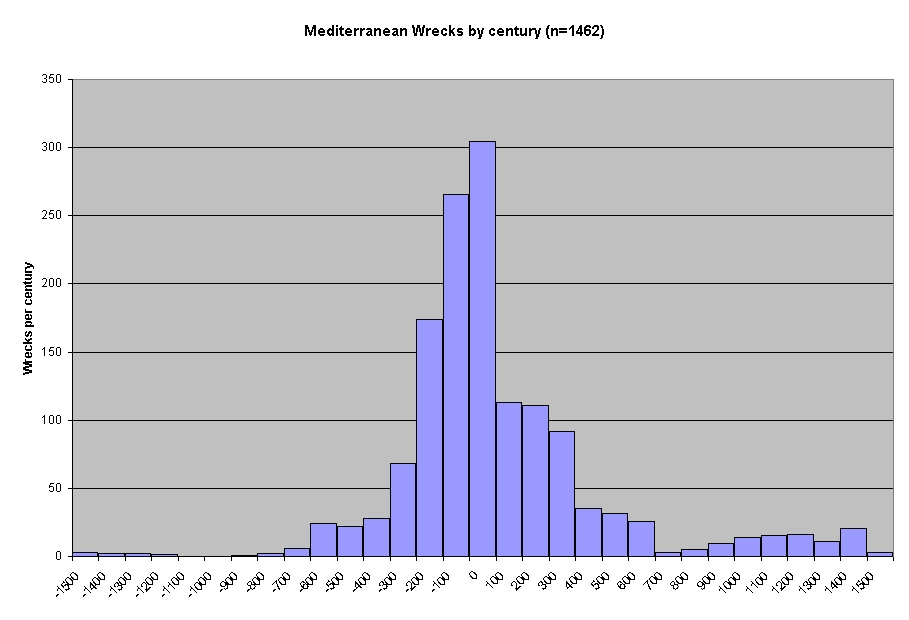
Archaeology tells a similar story. The second and first centuries BC were the time that the Roman economy really took off. Suddenly, Roman exports began to appear everywhere. Indeed there are few other parallels to such an expansion except perhaps that of Britain in the 18th and 19th centuries AD. But everywhere throughout the Mediterranean, evidence for Roman trade is found, particularly in the form of amphorae, large jars carrying the Roman wines that were so popular, and also olive oil and indeed garum, the fish sauce that was the Roman equivalent of Marmite and allowed your up and coming peasant to spice up his boring gruel into something far more exciting. By the first century BC some of these amphorae and this wine even reached far-off Britain.
But the history, as it appears in the history books, tells a very different story — a story that forms the basis for today’s critics who see Rome in an adverse light as being military despots in a slave-based economy. In the second century Roman bumbles on, but in the late second century and the first century, politics in Rome became very messy. The story begins with the Gracchi, the two brothers Tiberius and Gaius who both tried to introduce land reforms and who were both assassinated for their pains — a Roman equivalent to the Kennedy Brothers. There is a famous story in Plutarch of how Tiberius Gracchus, on his way to Spain, journeyed through Tuscany and everywhere saw the poor farmers being squeezed out by the huge factory farms introduced by the rich few Romans. Archaeologically however these latifundia have not so far been found. The story everywhere is of the growth of medium-sized farms. Yet on this on these couple of sentences, the whole story of the Roman economy in the first century BC is based — and that story is all wrong.
Marius and Sulla
The history of the collapse of the Roman constitution in the late first century BC is dominated by the stories of Marius and Sulla. Both were great generals who began in fine style by thrashing the enemies of Rome, but both misused the constitution to the point of destruction, culminating in the murder of Julius Caesar, who was in many ways the third person in this story.
It is tempting, if misleading, to see the story in political terms as being the struggle between the optimates, the best people who were the upper classes, and the populares who were the popular party. The comparison is very misleading because the term only emerged fifty years later in the speeches of Cicero, and in any case the term has been overlaid by the politics of the nineteenth century. But basically the optimates relied on the authority of the senate and the populares relied on the somewhat more dubious authority of the popular assemblies.
There were four major wars involved: the first was in North Africa where the Numidians were coming together to form a powerful kingdom in the fertile territory of modern Tunisia and Algeria, and where Jugurtha, who may have been the grandson of Massanissa, was turning the primitive Berber tribes into a civilised nation. He was becoming a bit uppity, so Rome’s rising general was sent out to defeat him. However Marius, who was in his forties, was joined by a younger assistant Sulla, who was twenty years younger, but was to prove to be Marius’ equal as a military man, and it was Sulla who eventually succeeded in capturing Jugurtha by a trick. There is a fine account of the war by Sallust, though the Numidians are due rather more credit for trying to civilize themselves.
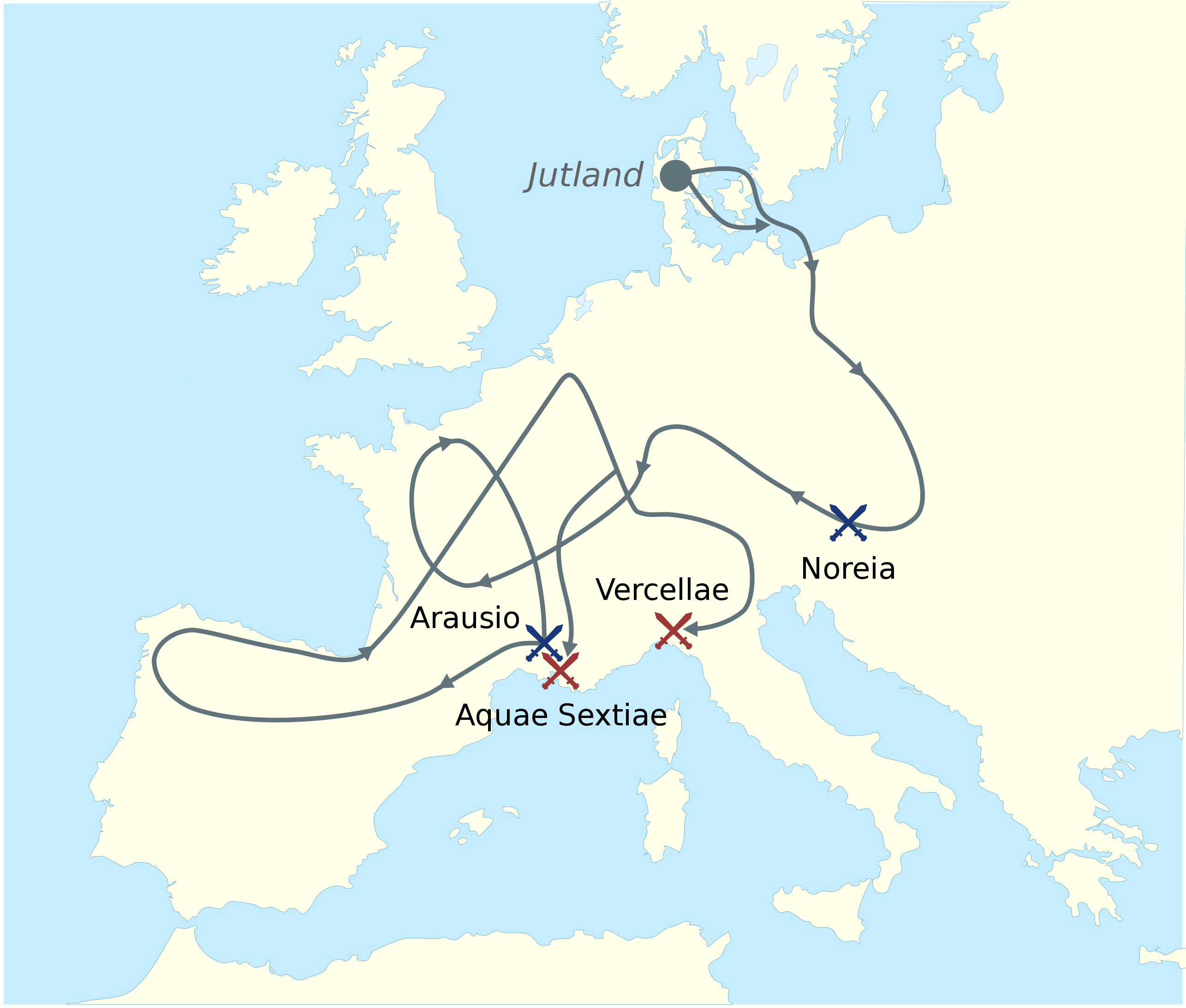
Then the Germans began giving trouble, and first the Cimbri, and then the Teutones broke out and Marius was sent to fight them. And this is where Marius began to play fast and loose with the constitution. He was sent out as a proconsul, but you are only allowed to be consul once, However as he needed to stay on as head of the army he persuaded the popular assembly to elect him as consul for a second, and then a third time. Indeed he was eventually consul six times – which was very naughty indeed, and the senate disapproved.
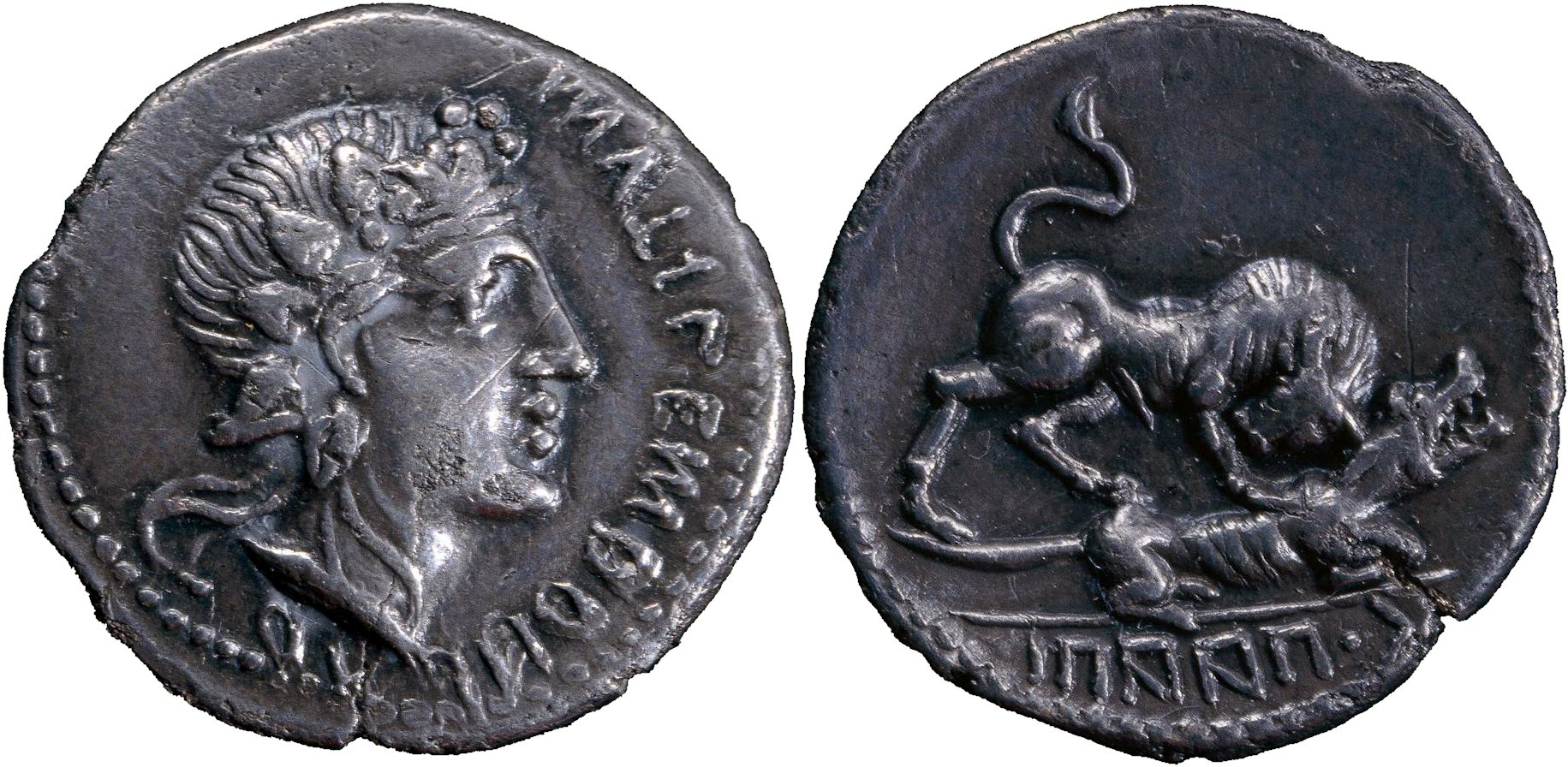
But a third, very different type of war was brewing. This was the Social War (91-87 BC) where the inhabitants of the Apennines, the tribes who Rome had spent the previous 300 years in conquering, wanted to obtain Roman citizenship. They were formally only allies (“socii”) of Rome, but they set up and set up a rival Roman Empire to obtain it – they even issued their own coinage aping Roman types (very confusing). Sulla led the opposition to them, but the revolt largely collapsed when the Romans offered citizenship to those who gave up the rebellion
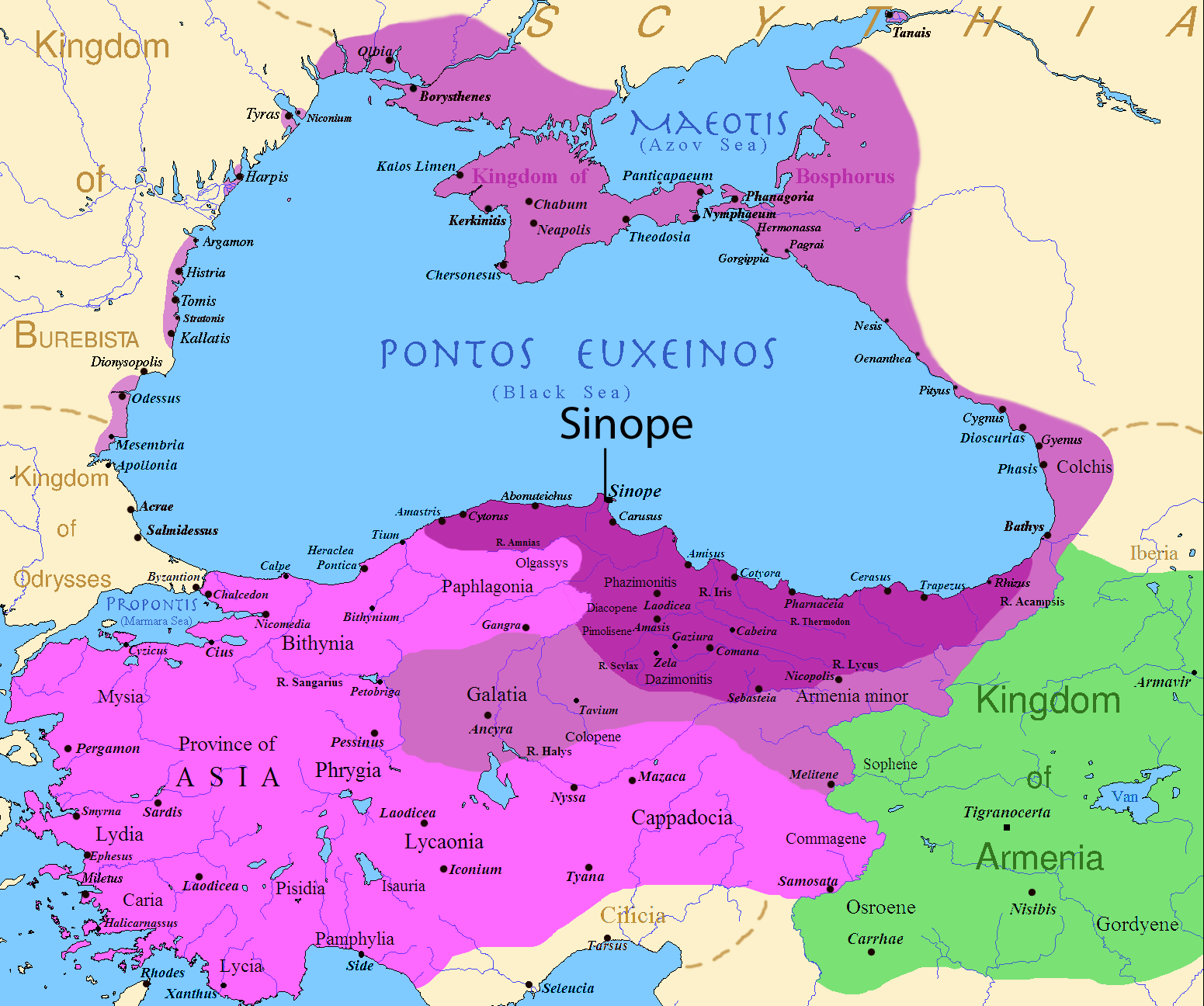
Following the Social War, Sulla was granted the rich province of Asia to carry out the war against Mithridates , who was building up an empire expanding from Pontus on the southern shores of the Black Sea. But while Sulla was assembling his legions, the command was transferred by dirty dealings to Marius, and Sulla felt he had no option but to march on Rome .A bloodbath followed, but eventually Sulla regained his command against Mithradates and forced him to a peace agreement. But in Rome his enemies regained control, and he had to do a second march and a second bloodbath followed. He then proclaimed himself Dictator, a title that had been dormant for over a century, and this enabled him to wipe out his enemies, and carry out reforms, some good, some bad. Eventually he retired and died in his bed. But Rome had changed enormously. As a result of the civil wars, it had become a very unhappy place, but as a result of the Social Wars, the number of Roman citizens had increased at least threefold and Rome had changed from being an overgrown city to being something approaching a modern nation state.
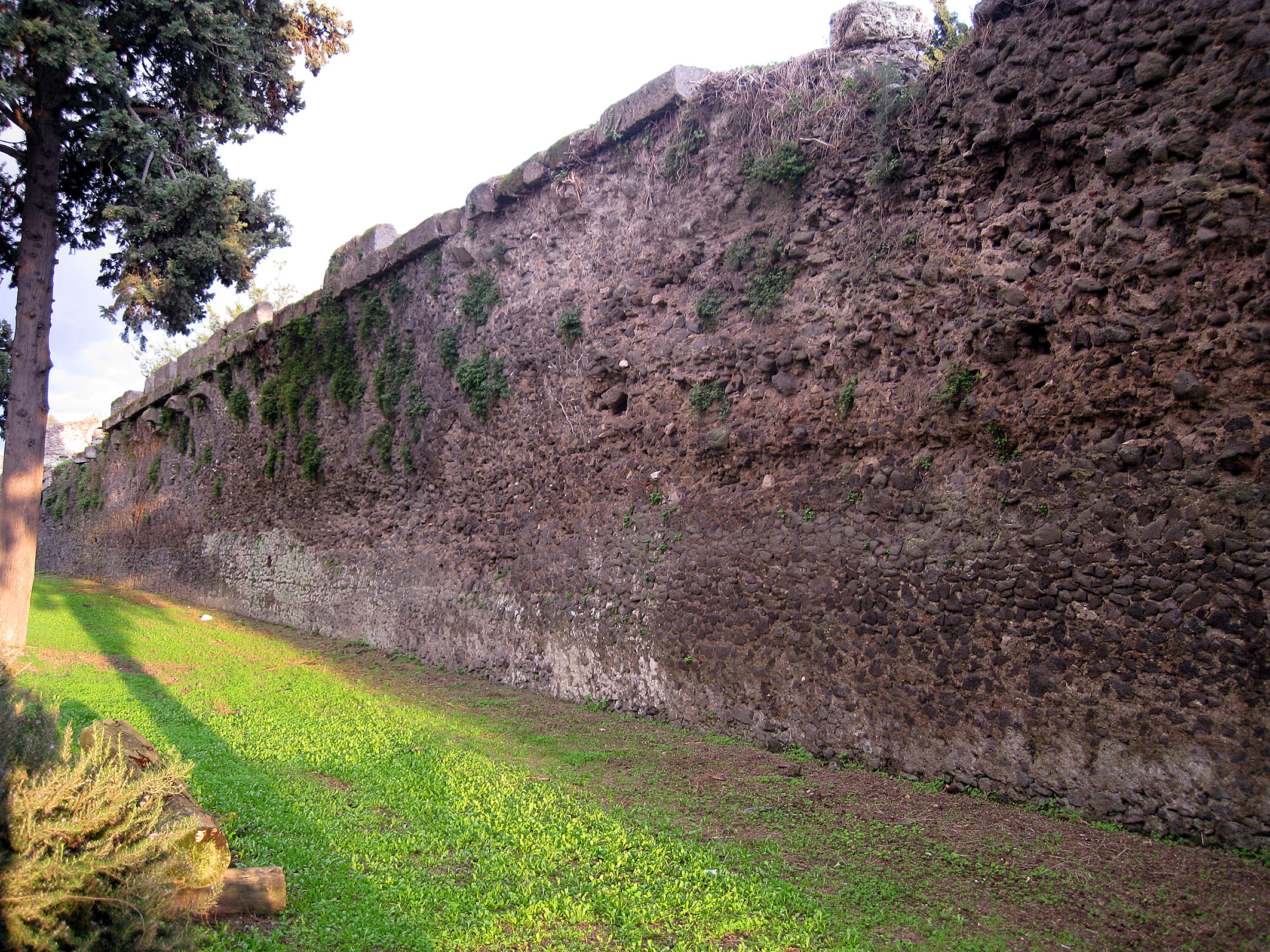
It is interesting to see what was happening in Pompeii. Down to 200 BC, Pompeii was still a small town, and although its extensive walls had been constructed in the fifth century BC, much of the area within the Walls was given over to agriculture. But from 200 BC Pompeii expanded enormously. The Social War of 80 BC was a disaster. Pompeii took the wrong side and was besieged by the Romans – the holes punched in the walls by the Roman siege machines can still be seen. A colony was imposed and new colonists were moved in to control the city. The language too changed. Hitherto the Pompeians had spoken Oscan and most of the inscriptions were in Oscan. After 80 BC virtually everything changes to the Latin and one would suspect that the new colonists became the aristocrats in the town. In fact this is not wholly the case. Certainly there were many new faces to be seen, with new names on the inscriptions, but many of the old names and the old families still continue. Above all, the prosperity goes ahead, and despite the warning earthquakes, Pompeii was still a very flourishing city when it was destroyed by Vesuvius in AD 79.
After the Sulllan episode was over, the story continues with Pompey, one of Sulla’s protégées, as brilliant a general as Sulla but a slightly better politican. As a general, he finally finished off Mithradates, and most notably, cleared the Mediterranean of pirates. The culmination came with Julius Caesar, who wanted to be an optimates, but was not really rich enough. He needed to make money fast, so he got himself elected to the province of Gaul, where in a campaign of sheer disgraceful aggression, he eventually by brilliant generalship conquered Gaul, and then had to cross the Rubicon and conquer Italy, only to be murdered when he tried to make himself dictator. It was left to his heir, Augustus, finally to restore peace to Italy by destroying the last vestiges of democracy.