
Why the Minoans are important
What then can the Minoans tell us about the way that pre-money economies actually worked? It has long been accepted that the palaces played a crucial role in the workings of the ‘gift exchange’ economy, with goods being rendered to the ruler and used by him for prestige purposes and being occasionally redistributed down to the rest of the population. The palaces were essentially the places for this redistribution, and therefore I have begun my account with the Minoans, because the Minoan palaces were right at the heart of the Minoan civilisation.
But how far are the Minoans typical? There were many great empires that dominated the eastern Mediterranean and the near East in the second and third millennia BC – indeed, the Minoans were one of the smaller empires and were the last to be discovered. It has the advantage of being an island so that they form a coherent example body of a Bronze Age empire, and it also helps that they were the ancestors of the Greeks, at least in the latest period.
Many of the other empires were centred round temples or tombs – one thinks of the Egyptians and their pyramids – but the Minoans did not go in for grand temples and tombs: did this mean that the rulers were still considered to be men, unlike the other empires where the rulers were considered to be gods and it became all important to build a magnificent home for the living ruler, and a spectacular tomb for him when he is dead, or should one say passed to heaven.
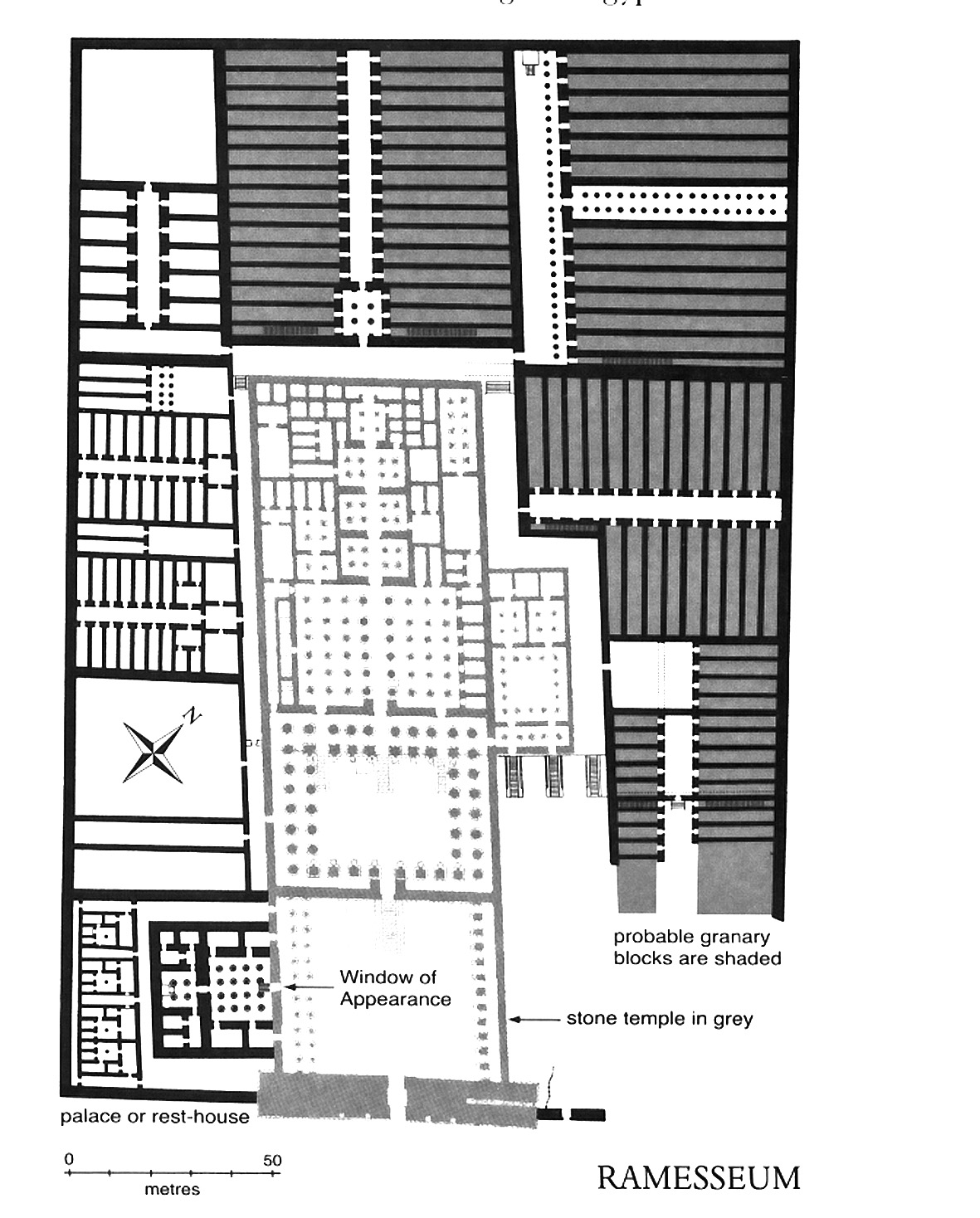
However these temple-based empires also operated by gift exchange. The classic example of this is the Ramesseum in Egypt, hymned by Shelley as being ‘Two vast and trunkless legs of stone stand in the desert’. The remains of the temple are indeed still magnificent but surrounding it is a huge network of granaries where the grain was stored. One thinks of the story of Joseph in the Bible who forecast seven years of abundance and seven years of famine. This is the economic function of the temples and often the storehouses exist, even if archaeologists have not excavated them.
But what was life like in these great empires? Were they happy? The answer is probably yes. These gift exchange societies form a pyramid, the graded system of a caste society, and provided you accepted your position in life you could be perfectly happy. Thinking was discouraged. Ceremonies and processions were regularly laid on and they were great fun and you could enjoy the happenings. You did not have to make any decisions for yourself – you had no choice, so you never questioned your role in life. They are like totalitarian societies today, North Korea being an obvious case where the citizens are perfectly happy because they do not have any choice. Indeed even in our own society we can be brainwashed into accepting dogma without thinking. One thinks of the lack of gun control in America which the rest of the world thinks is very odd, or the National Health Service in Britain.
However, sometime around 1200 BC, the Minoan empire collapsed. It was not alone in its collapse for all the great empires of the Near east collapsed at around the same time. The classic example is the fall of Troy, as recorded in the Iliad, which was dated by the Alexandrine scholars to 1184 BC, which is surprisingly close to the date given by modern scholars. The Mycenaean empire in Greece collapsed, as did the Hittite empire. In Egypt the New Kingdom finally came to an end at the hands of the Sea Peoples, the mysterious sea raiders who have never been properly identified; and the Assyrians lost most of their empire.
The reasons for the collapse are one of the big unknown problems of history. It is often compared to the collapse of the Roman Empire in the 5tth century AD. The easy solution is to say that it died of old age though this only makes sense as a metaphor. Was there a great disease or a climate disaster? None is recorded. But the dark age that followed was extensive; everywhere the pottery industry is replaced by local production and by the 10th century BC there are few major sites anywhere in the eastern Mediterranean and the Near East.
We come to a new story and a new chapter: it was not just the Greeks but also the Phoenicians to the East and the Etruscans to the west, and indeed Tartessos in far off Spain. Everywhere a new type of society based on individual city states began to rise. It was a new world, and it is time to move to a new chapter.
My original version was too long, so I cut it down, and this is my cut down version. However, I also wrote an additional conclusion, which I offer here.
11th August 2022