The Rise of Athens
The Archaic period marks a major change in politics. This is characterised by the rise of the ‘city state’: there were no more kingdoms but the aristocratic families took control of individual cities. Gradually politics developed in two different directions: some cities developed as oligarchies where a few leading families directed control of the state. On the other side, some cities developed a more popular form of government – either as tyrannies or democracy. We tend to think of tyranny and democracy as being two opposites but in Greece they tended to be two sides of the same coin. When a democracy broke down a tyrant would emerge to put it right, and when the tyrant died or tried to pass on his rule to his sons, a more democratic form of government would take over. Thus in Greece some cities tended to alternate between tyranny and democracy, while others became oligarchies which were often more stable, because once an oligarchy is established, it can be very difficult to dislodge.
But what was really happening in archaic Greece? What we are really seeing is the breakdown of the old feudal system or a kinship-based society and its replacement by a more broadly based society – which I tend to call a class society, that is a more fluid society where your place in society is more flexible. It is a change from a society where you always owe dues to your superior and your superior gives you support and ‘gifts’, to a society where exchange comes ultimately in the form of money. It is a society ready for money, indeed a society that needs money if its economic basis is to make sense and the citizens’ desire for more freedom and control over their own lives is to be fulfilled.
The change is best seen at Athens with the reforms of Solon. There had been an earlier reformer at Athens called Draco, mainly remembered for giving his name to the term ‘Draconian’, because his laws were too severe; nevertheless he made a major contribution to the concept of law by changing the law of homicide. Previously if one man killed another it was up to the victim’s family to pursue the matter for blood money even if the death was accidental. Draco established the principle that such cases should be judged by a body of magistrates.
Solon (circa 638-558 BC) was more successful as a reformer. Solon was one of the leading citizens of Athens – a wise man, a poet (fragments of whose poetry survives) and reformer. In 594 BC he was chosen to be Chief Archon, that is the annually elected ruler. Athens was in chaos, so he drew up a new constitution which he said was not to be altered for ten years, upon which he took himself off for ten years, visiting Egypt and Lycia and making himself unavailable so that no-one could challenge him over his constitution.
The big problem for Athens was the accumulation of debt. Land was held by small farmers but if they could not pay their rent they fell into debt, and if the debts accumulated they could be sold into slavery. The main feature of Solon’s reforms was the cancellation of debts. This proved to be a satisfactory middle way, for the poor people were released from their debts while the rich were relieved that there was not a general land redistribution. They may have lost their debts but they kept their land.
But the problem is to know what is meant by the word ‘debt’. We tend to think of debt in money terms but money had not yet been invented and we must think of debt in feudal terms that you were expected to pay a sixth of your produce to your superior every year and if you could not pay your sixth, the only security that you could offer was your own life and liberty, which meant that you could be enslaved. The real importance of this is that we are seeing the breakdown of the old feudal system, though the problem could not really be solved until the invention of money, 50 or 100 years later.
The ranking system of the old feudal system – I tend to call it a caste system – was replaced by a new ranking system based on wealth. This was based on a medimnos of cereals, a word generally translated as bushel. The top rank of society had the wonderful name of pentakosiamedimnoi or 500 bushel men, who alone were qualified to serve as generals in the army (if you had enough bushels, you were therefore qualified to be a general). Then came the knights, the hippeis who had 300 medimnoi and could serve as a horseman in the army – and were rich enough to have a horse. Then came the zeugitae who had 200 medimnoi and were the yeomen who served as hoplites or foot soldiers in the army – but they were expected to pay for their own armour. Then there were the thetes who had less than 200 medimnoi and who served as auxiliaries or slingers in the army. They were not allowed to hold any political office but they were nevertheless able to be present in a general assembly, and they were eligible to serve as jurymen in the courts, so this is an important step towards ultimate democracy. He also (probably) established a Council of 400 men, 100 from each tribe, to act as a counterweight to the Areopagus, the assembly of the ex-magistrates.
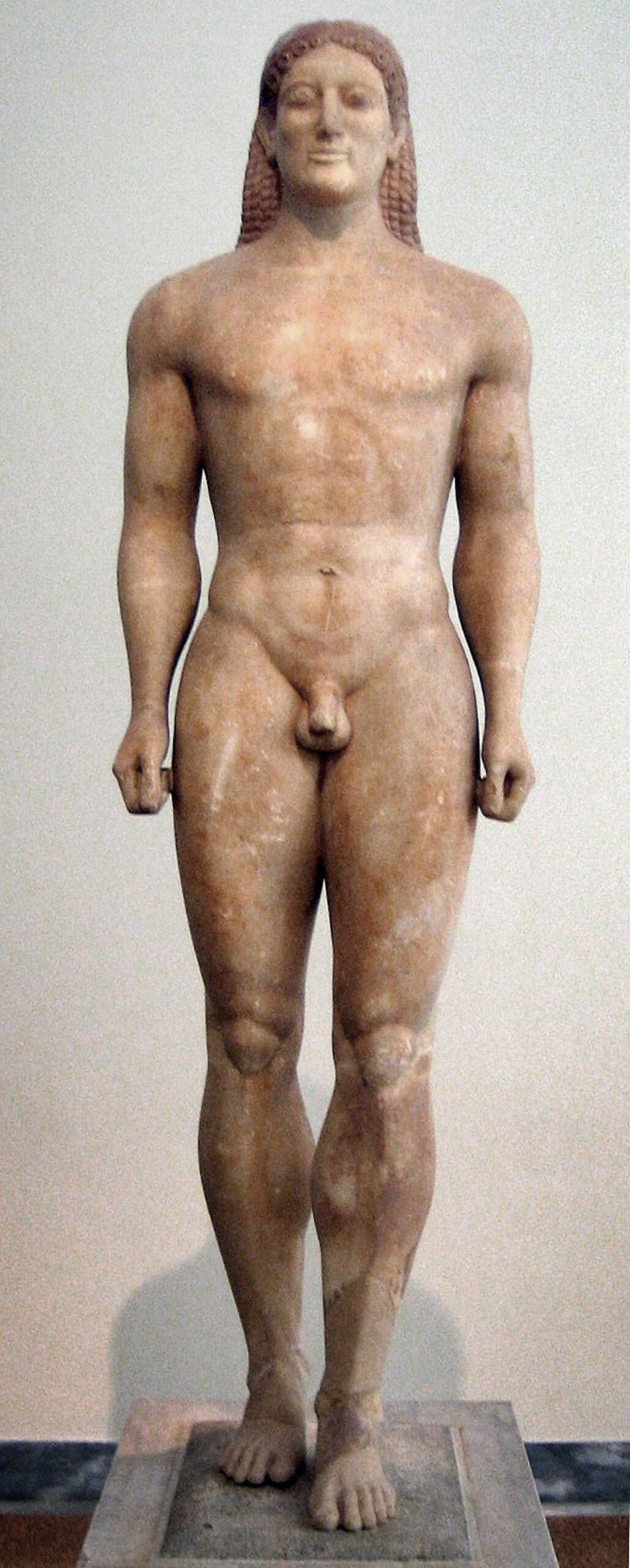
These reforms mark an interesting step in the reshaping of Greek society that was taking place at the time: no longer was rank dependent on birth, but on wealth, which is a big step forward in the structure of society. The system did not last long, but it paved the way to the 5th century when the whole system was swept away and replaced by a new system of democracy.
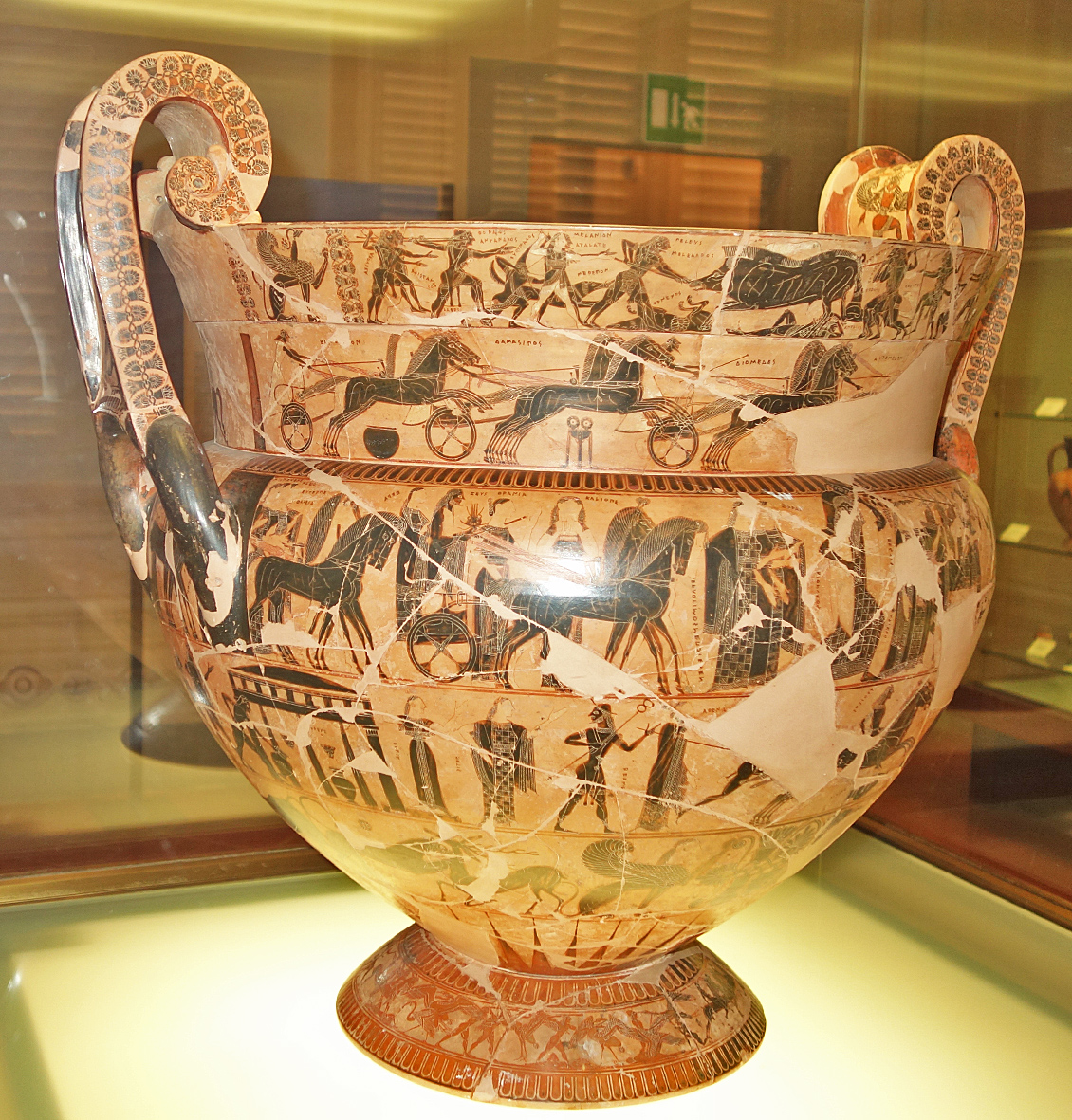
Solon also carried out other reforms – the details are uncertain for there is no definitive account and later politicians tended to attribute their own reforms to Solon, but it appears that he revised and standardised weights and measures, he encouraged foreign traders and also the cultivation of the olive tree. It is perhaps no coincidence that around this time the new Athenian ‘black figure’ pottery swept the markets of Greece and Etruria that had hitherto had been dominated by Corinthian pottery.
Solon was also a keen poet, though his poetry only survived in fragments in later writers. But his poetry seems to be essentially preaching, deploring the greed and arrogance of the rulers and inculcating a sense of civic duty. In this he seems to have been largely successful, for the major problem of debt and civic disunion that wracked the 7th century appears to have changed to being only a minor problem in the 6th and 5th century when Greece or at least Athens became a sort of functioning democracy. Before Solon, Athens was not one of the leading states of Greece: Corinth and perhaps Sparta were the leading states with Argos and Thebes not far behind. But in the 6th century, Athens moves ahead and establishes a dominating role, which it was to hold for the rest of Greek history.
On to Athens invents Democracy