
Pompeii – Baths, theatres and Houses
The Baths
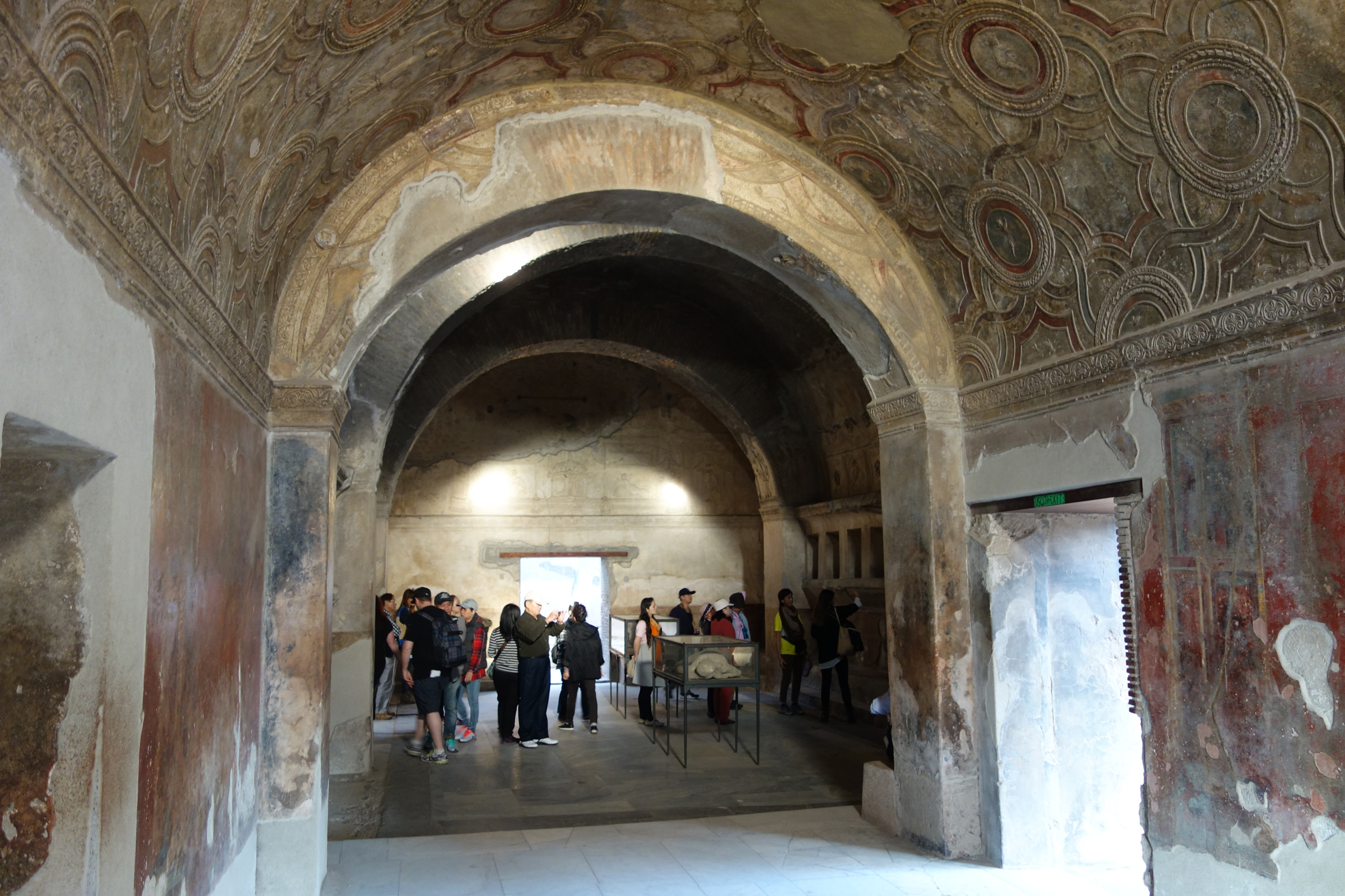

The most characteristic feature of a Roman town were the baths. They were not so much for cleanliness, but were essentially meeting places where one went to meet your friends and pass the time of day. Baths were essentially Roman – they are rarely found in Greek cities – but in the Roman town, the baths played a leading role.
There were four public baths at Pompeii, the grandest of which were the Stabian baths, near the Stabian Gate. These were the oldest and largest baths, in their final form, an elaborate set of baths for both men and women. They were built originally by the fourth century BC, but there was a major reorganisation in the second century BC, while in the 1st century BC further rooms were added when a new aqueduct brought running water to the town.
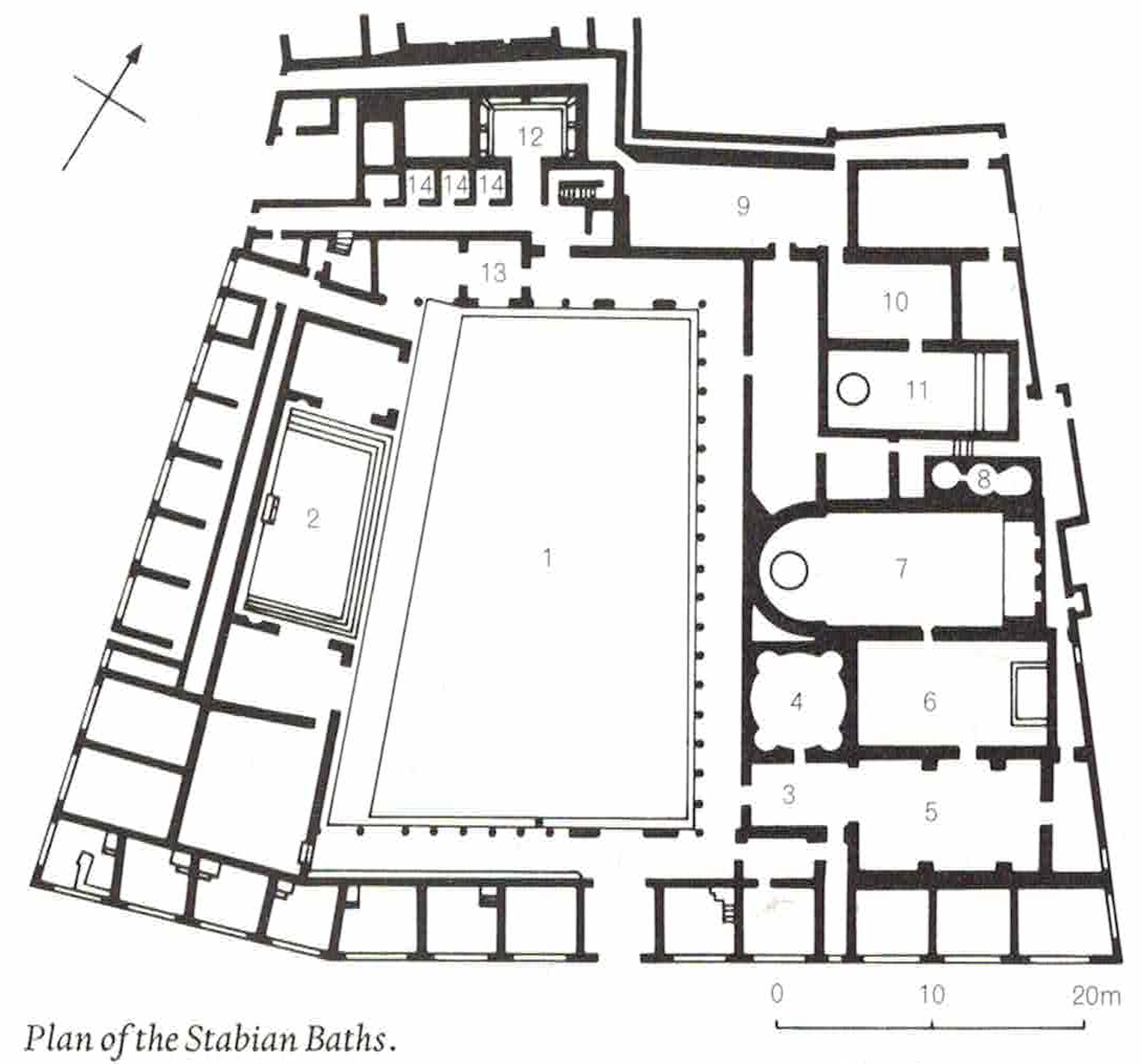
The work was done by Gaius Uulius and Publius Aninius the duo viri, ‘in accordance with a decree of the town councillors using the money that the law requires them to spend either on games or a monument’ – an interesting example of how the town councils decided that work needed to be done, but the mayors paid for the work and supervised the construction.
 |
 |
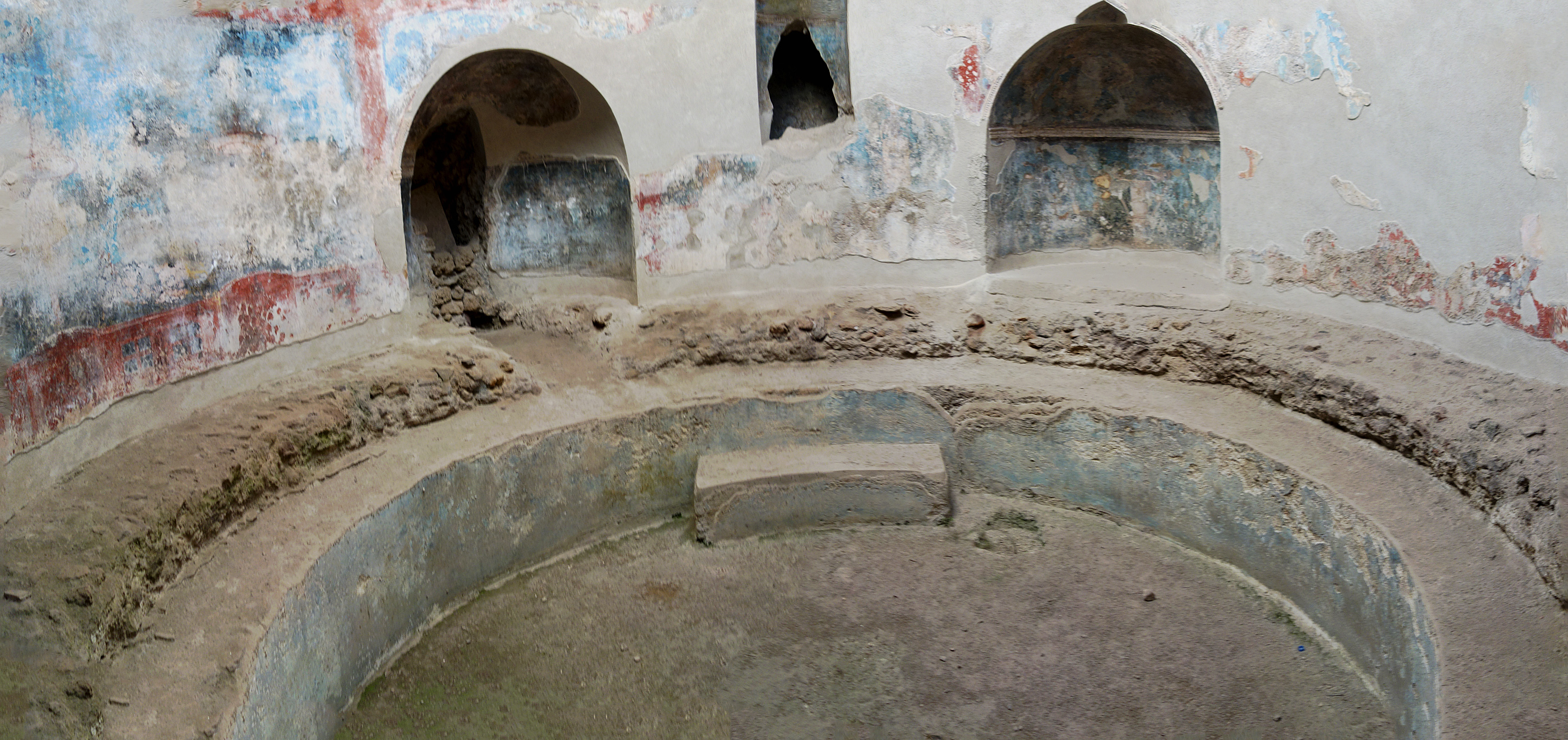
| The circular pool forming the cold baths. |
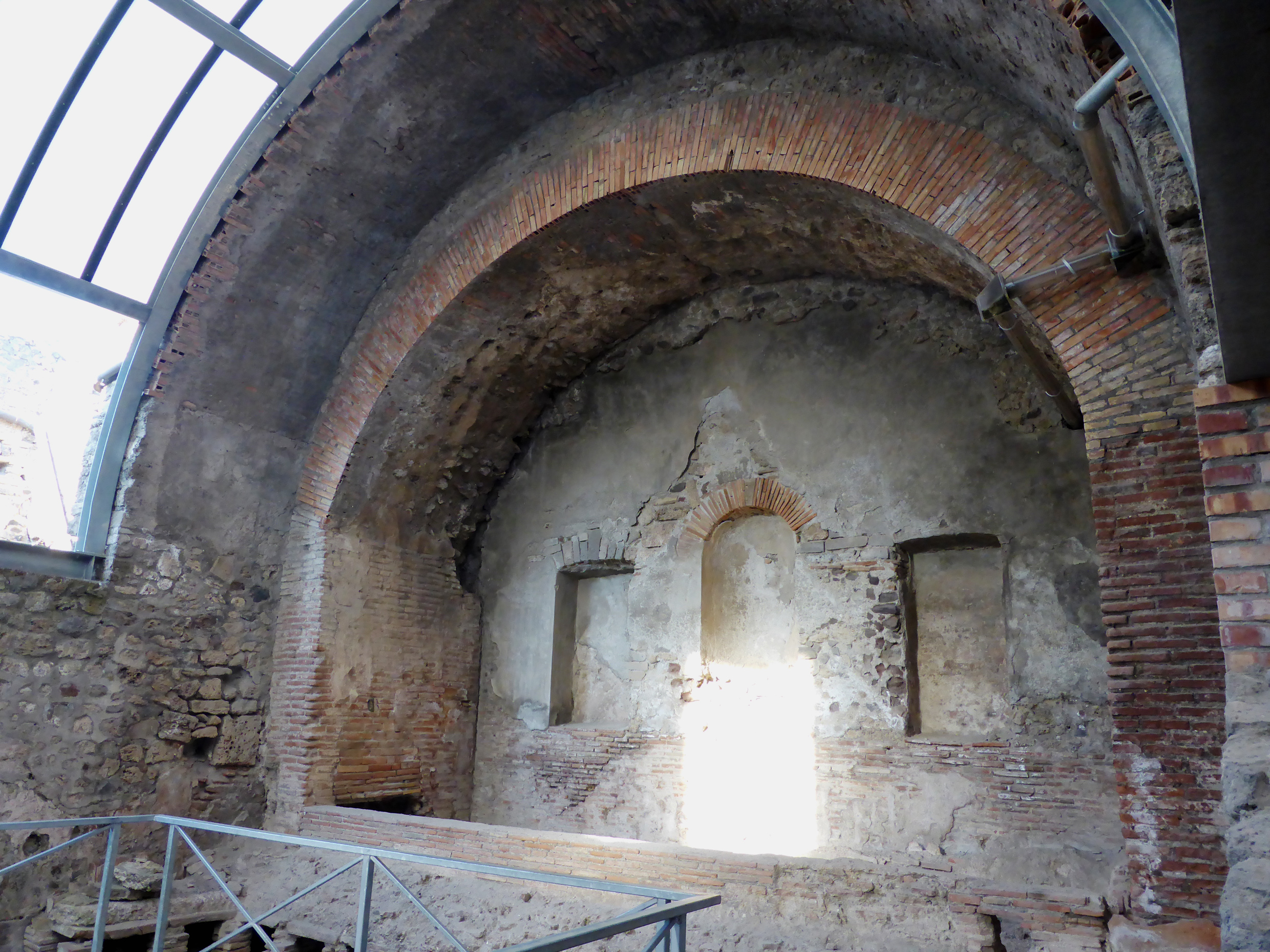
The end wall of the warm room in the men’s baths. |
However when the town became a colony in the 80s BC, it was decided that a new more efficient set of baths should be constructed right by the forum, behind indeed the Capitoline temple, though in this case the duo viri undertook the construction at public expense. A third set of baths was also under construction at the time of the eruption of Vesuvius which are known as the Central Baths, even though they are situated in the northern part of the town outside the old centre. Interestingly, they are only a single set of baths with no separate provision for women: was this because women were excluded or did they use the baths at different times? Or had the Romans become broadminded and decided that men and women could use the same baths?
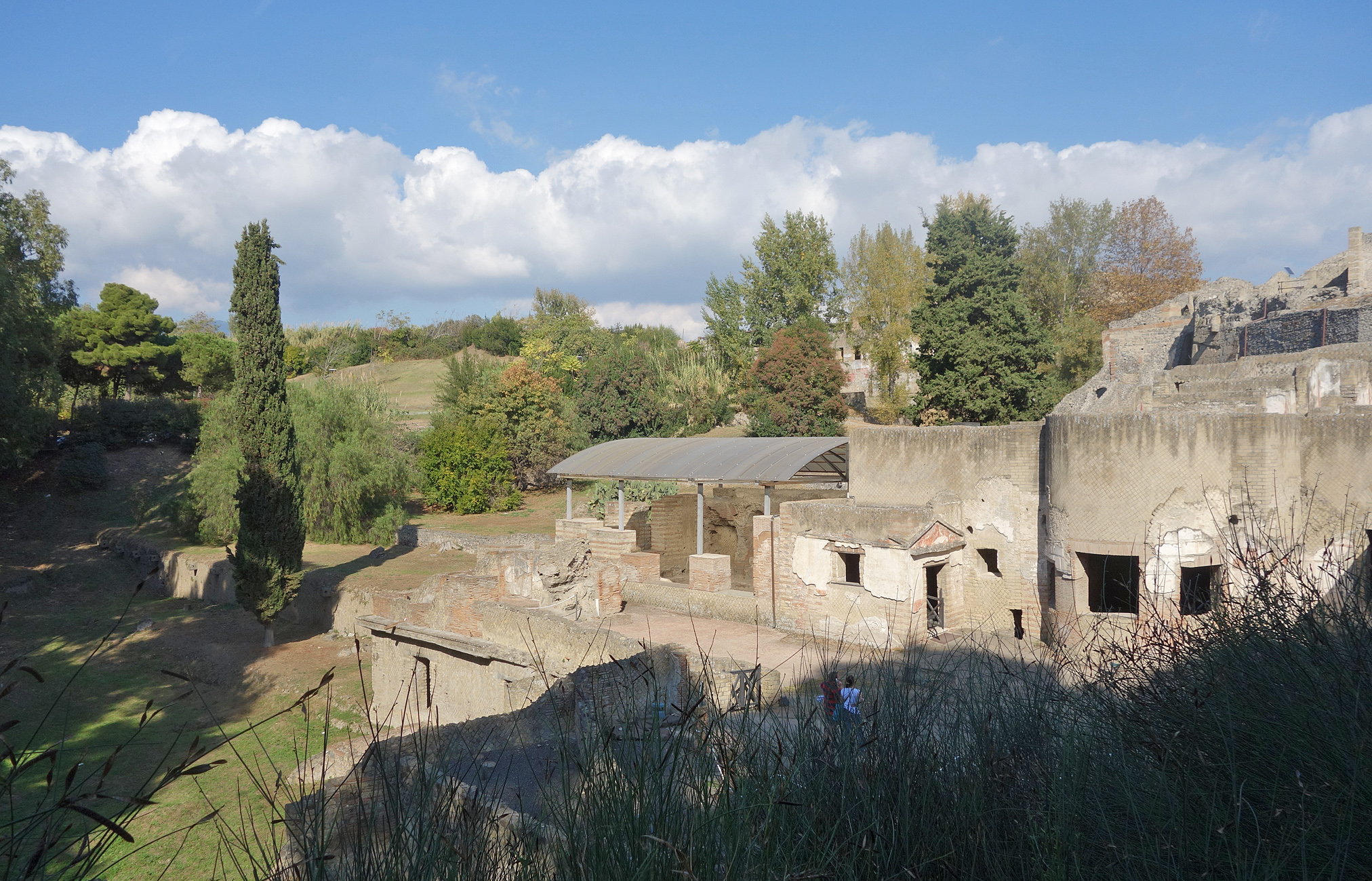
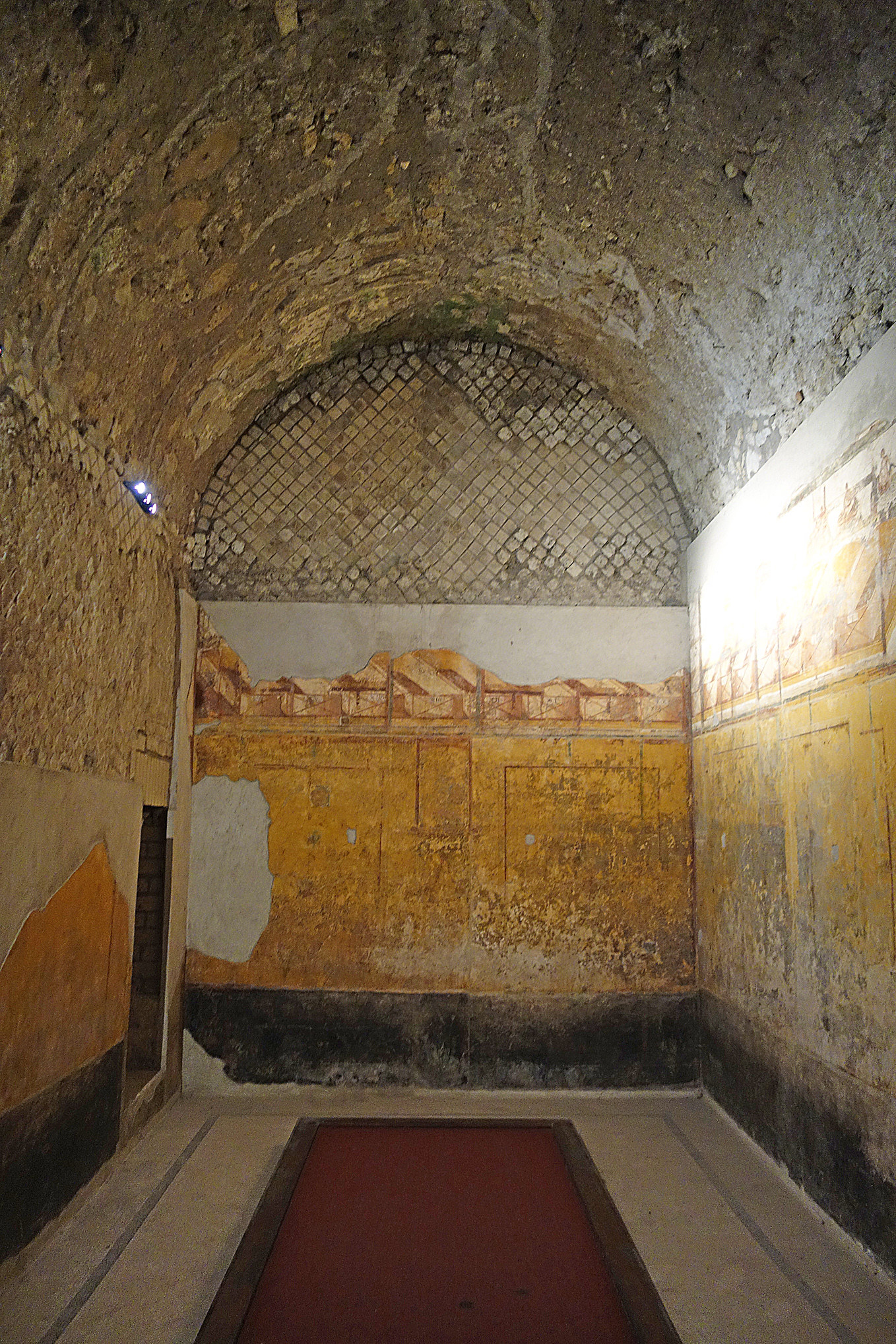
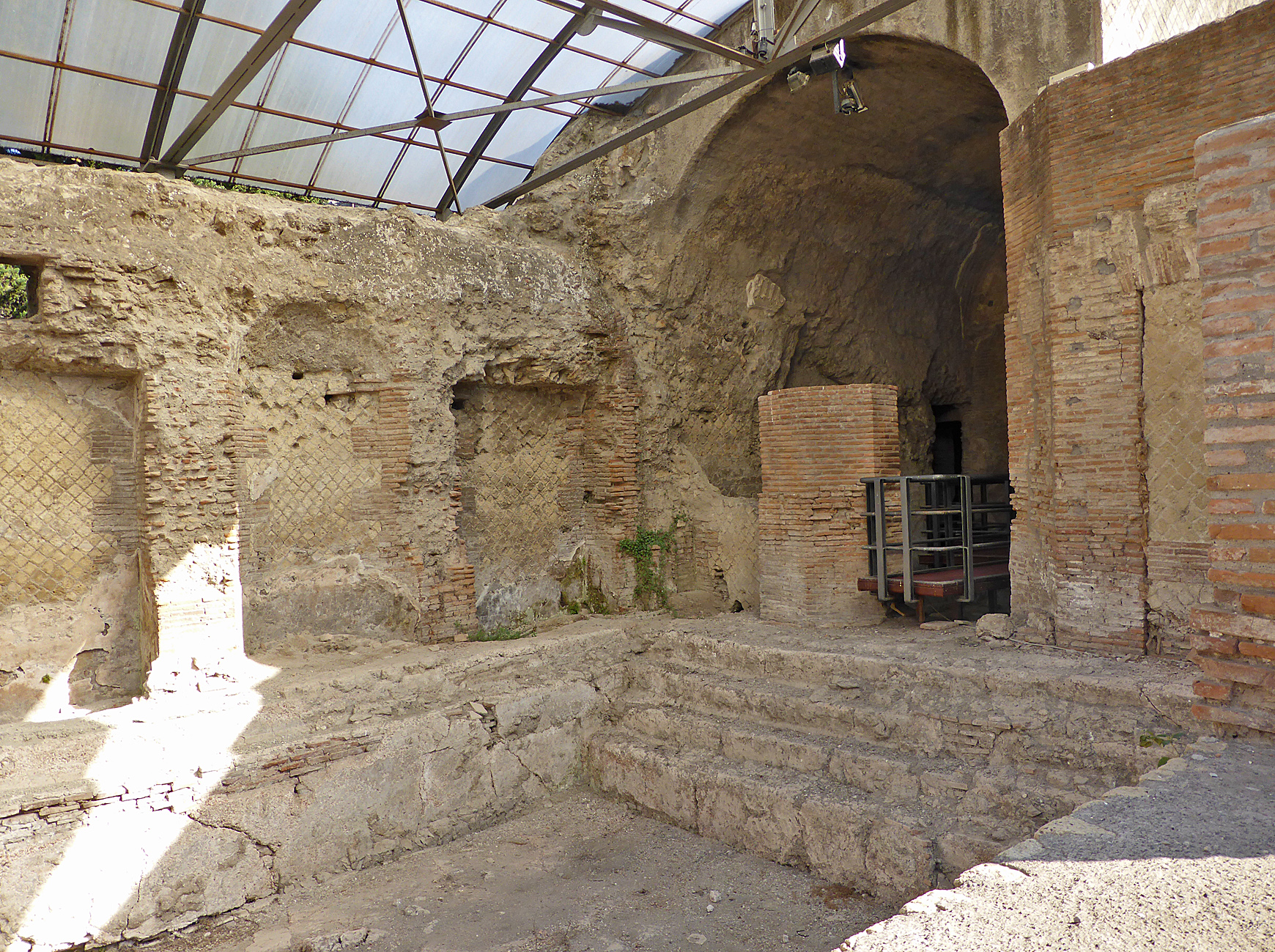
Interestingly there was yet another set of baths built outside the Marine gate that led down to the harbour. These are known as the Suburban Baths, which were only excavated quite recently. These caused something of a sensation when it was realised that there was a brothel attached, with in the entrance hall, a set of paintings which displayed the various attractions offered by the young ladies. One wonders whether this was a private enterprise, built by private individuals for public use as a commercial venture.

 |
 |
.
 The entrance hall and undressing room. The interesting frescos can be seen in a row at the top |
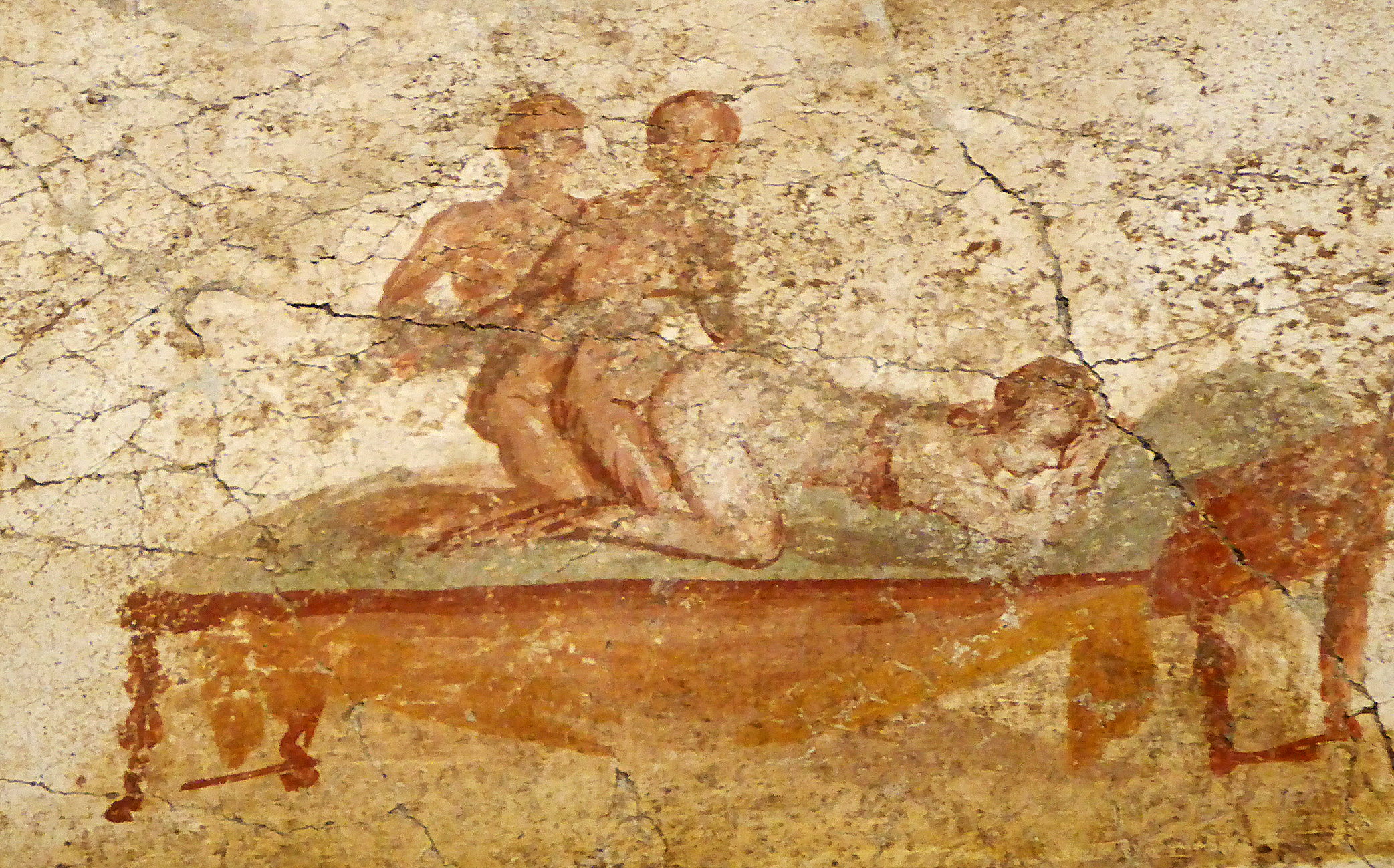 Detail of one of the paintings – say no more |
Entertainment

Then there were the theatres. Pompeii did in fact have two proper Greek-style theatres which were down in the old town. The larger was one of the first buildings to be built in the town in the 4th or even the 5th century BC, when Greek influence was strong and every respectable town had to have a Greek style theatre. Adjacent to it a smaller covered theatre was built in the 1st century BC when the town became a Roman colonia. Perhaps it was mainly an intimate concert hall, but was it also a meeting place where the town council met?

But the most popular place of entertainment was the Amphitheatre, built in the far eastern corner of the town well away from the formal centre, for Amphitheatres were places where rowdiness was likely to take place so they should therefore be placed well away from the town centre. The Amphitheatre was very much a Roman form of entertainment and was built when Pompeii became a Roman colony. From 91 – 88 BC, Rome went to war with its allies in the so-called ‘social war’. This is the strangest war ever, for it was a war by the allies, the socii, who wanted to be given Roman citizenship. The Romans won the war but promptly gave the allies citizenship which is what they wanted. So the allies having lost the war gained their objectives. It was a war that is somehow typical of the Romans in that they were stupid to go to war in the first place, but having won the war ended up by doing the right thing.
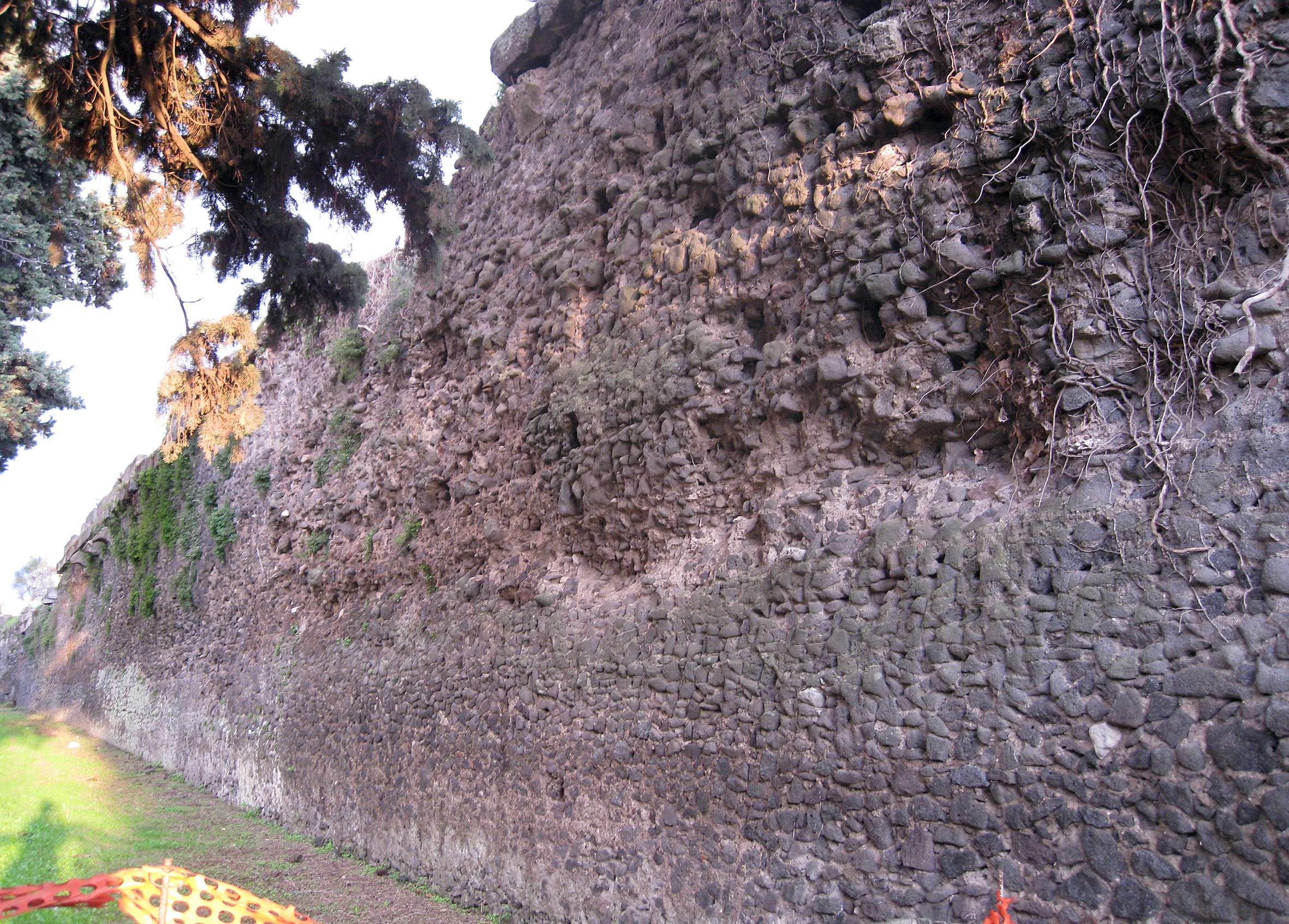
However Pompeii having gone through war with the rest of the allies was besieged by Sulla, the great Roman general. The damage to the walls by the ballistae (boulders) hurled by the Roman siege engines can still be seen. However the Romans having won, made Pompeii into a colonia and imposed a group of colonists on the town. The results can best be seen archaeologically by the inscriptions which had hitherto been written in the Oscan language, but are hence forward in Latin, and one of the big results can be seen in the Amphitheatre where an inscription informs us that the Amphitheatre was built by Quinctius Valgus and Marcus Porcius duo viri for the honour of the colony, who saw to the construction of this spectacula at their own expense and gave the land in perpetuity to the colonists: though interestingly inscriptions on the different sections record the names of the magistrates who paid for the seating.
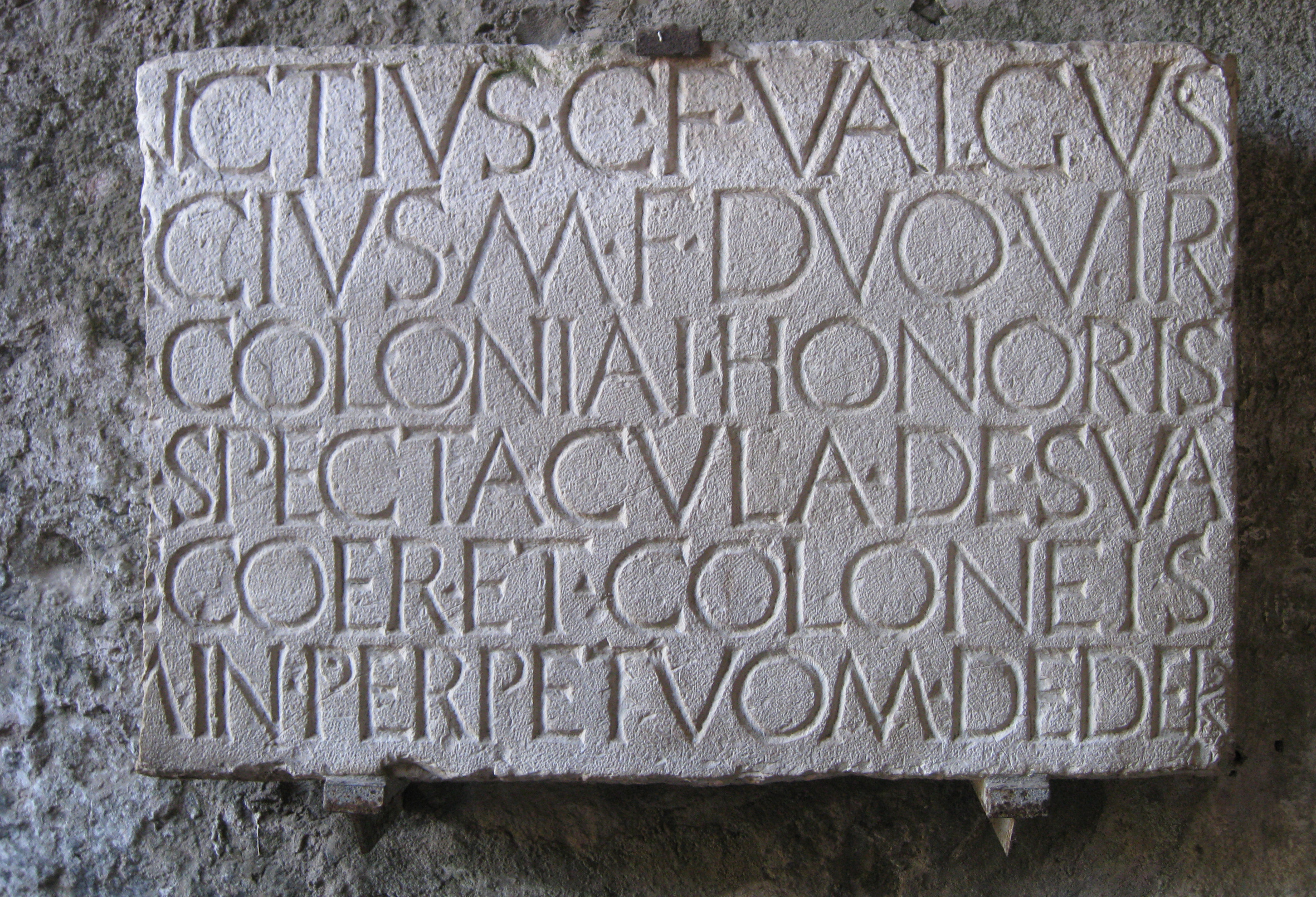
But who were these two duo viri who paid for the whole amphitheatre? Presumably they were new colonists who had grown rich at the expense of the old guard, but who ploughed some of their ill-gotten gains back into the building of the Amphitheatre. But that two men were able to pay for the whole amphitheatre – said to be the oldest stone amphitheatre in the whole of Italy – demonstrates the extent of the wealth in Pompeii in the 1st century BC.
The amphitheatre is the only occasion in which Pompeii appears in the pages of Tacitus prior to the eruption, for in AD 59 a riot occurred and the visiting supporters from the nearby town of Nuceria had a dust up with the local supporters – a painting of this is preserved in one of the houses – and a complaint was made to the emperor and investigators were sent down and games were banned for ten years, which seems a fairly harsh punishment.
It is fascinating to see how the town actually worked: there was no big palace, no house for the governor, no castle, no barracks for soldiers. Instead a number of buildings round the forum, temples and baths, theatres and an amphitheatre — politics and business and pleasure —all mixed up. But the public buildings of Pompeii though fine were not overwhelming and the real wealth of the town was to be found in the private houses.
The shops and houses
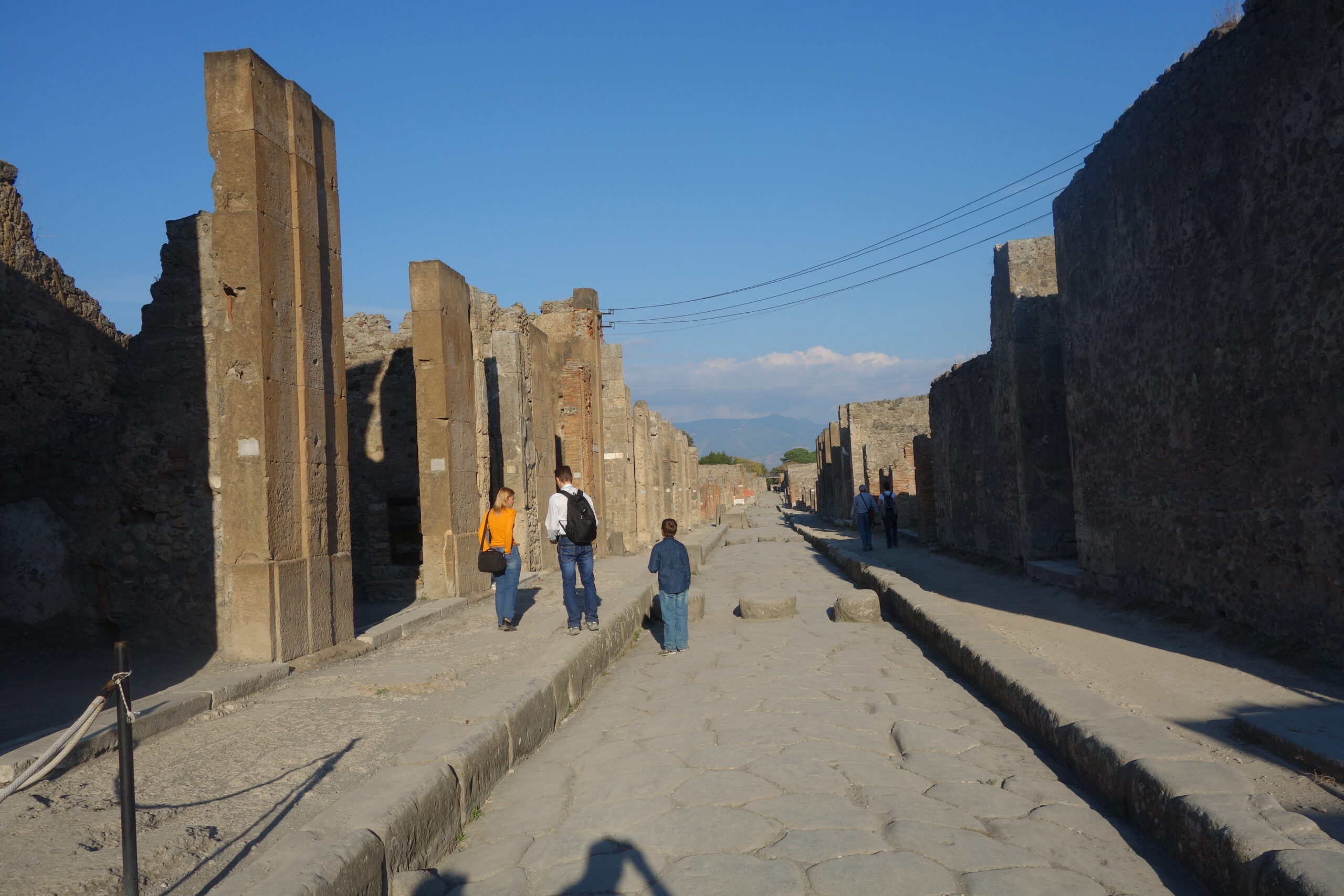
The main street of the town leads out from the south east corner of the forum. It is known as the Via del Abbondanza, and it leads eastwards from the forum to the far end of the town, lined with all the big houses, though in many cases their frontages are taken over by shops and bars, — the Roman equivalent of our coffee shops.
Everywhere there are shops – there are innumerable bars or fast food outlets with huge jars (dolia) sunken into the counters from which food could be served.
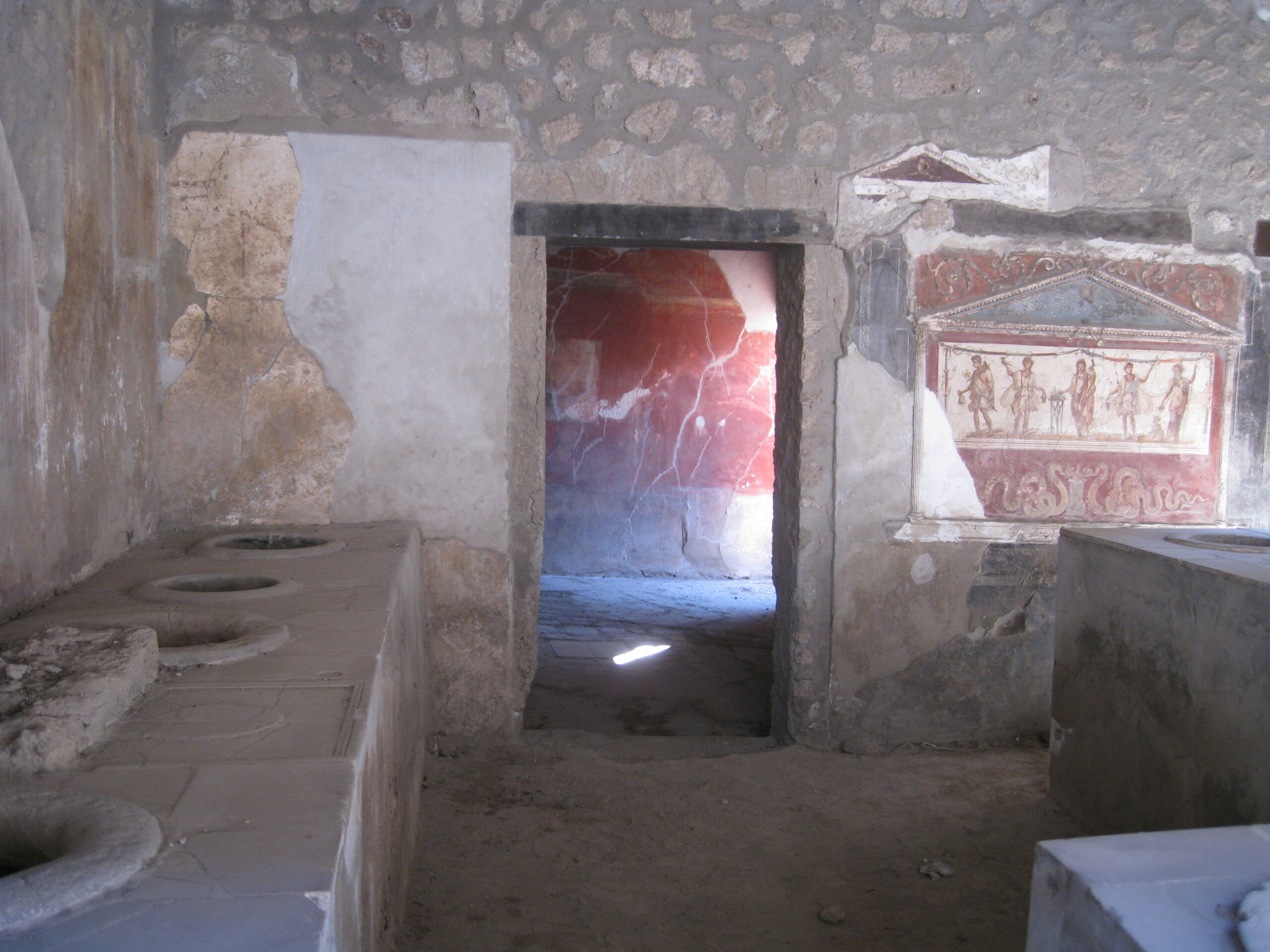
One of them, that of Vetutius Placidus was the front part of a prosperous business with a house behind it and accommodation on the first floor. Perhaps it served as an Inn, as well as an eating place. In one of the serving jars, 1385 coins were found, no doubt change and savings thrown in at the last minute as the shopkeeper fled the eruption.
There are also numerous bakeries with large grinding stones probably driven by a donkey, often with an oven nearby.

And then there are the fullers, the equivalent of our dry cleaning shops, where clothes and furnishings were washed in huge tanks.
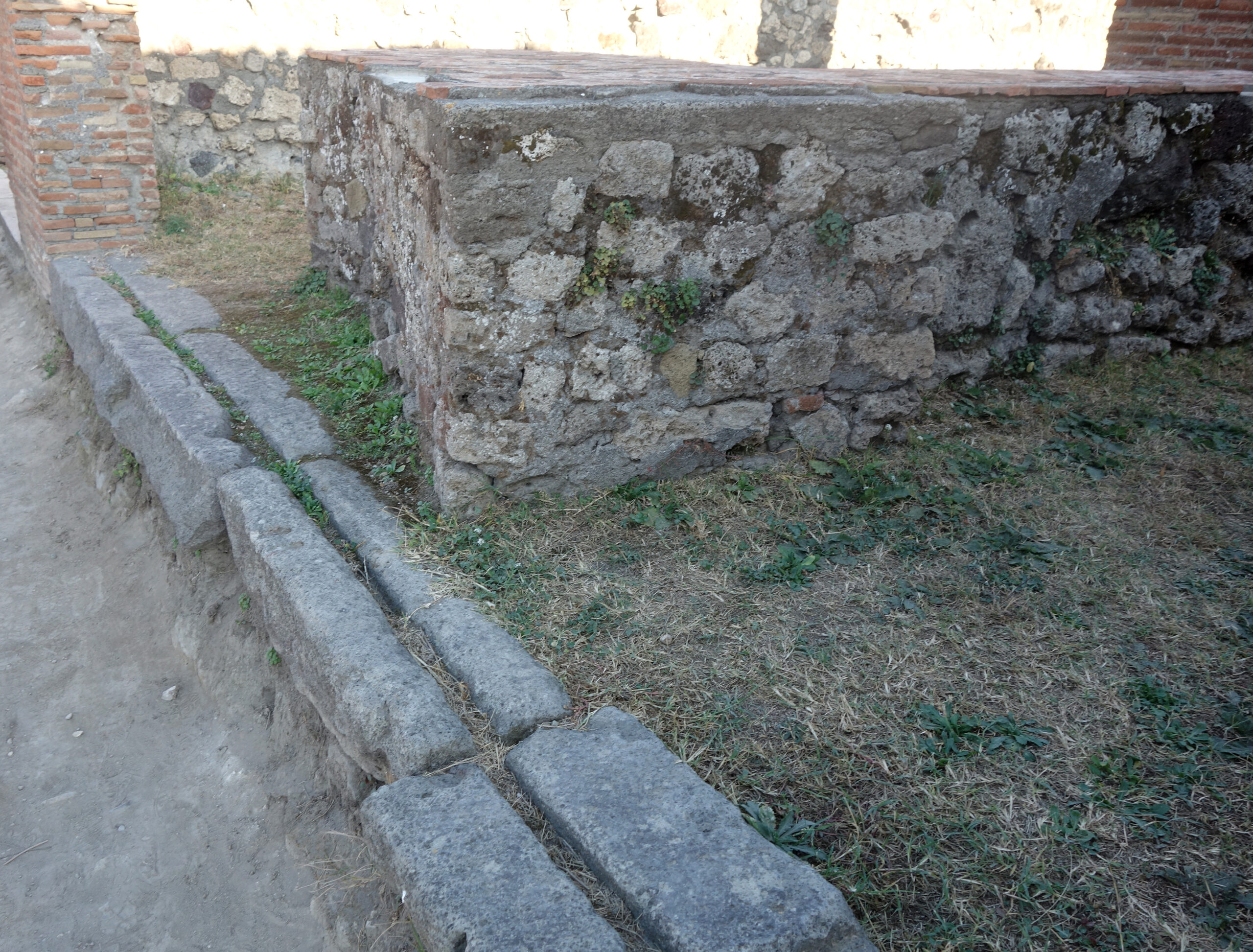
Something that every shop needs is shutters to close it off at night.
Note the long grooves along which the shutters would have run to close off this thermopolium or bar when it closed for the night.
Grand Houses
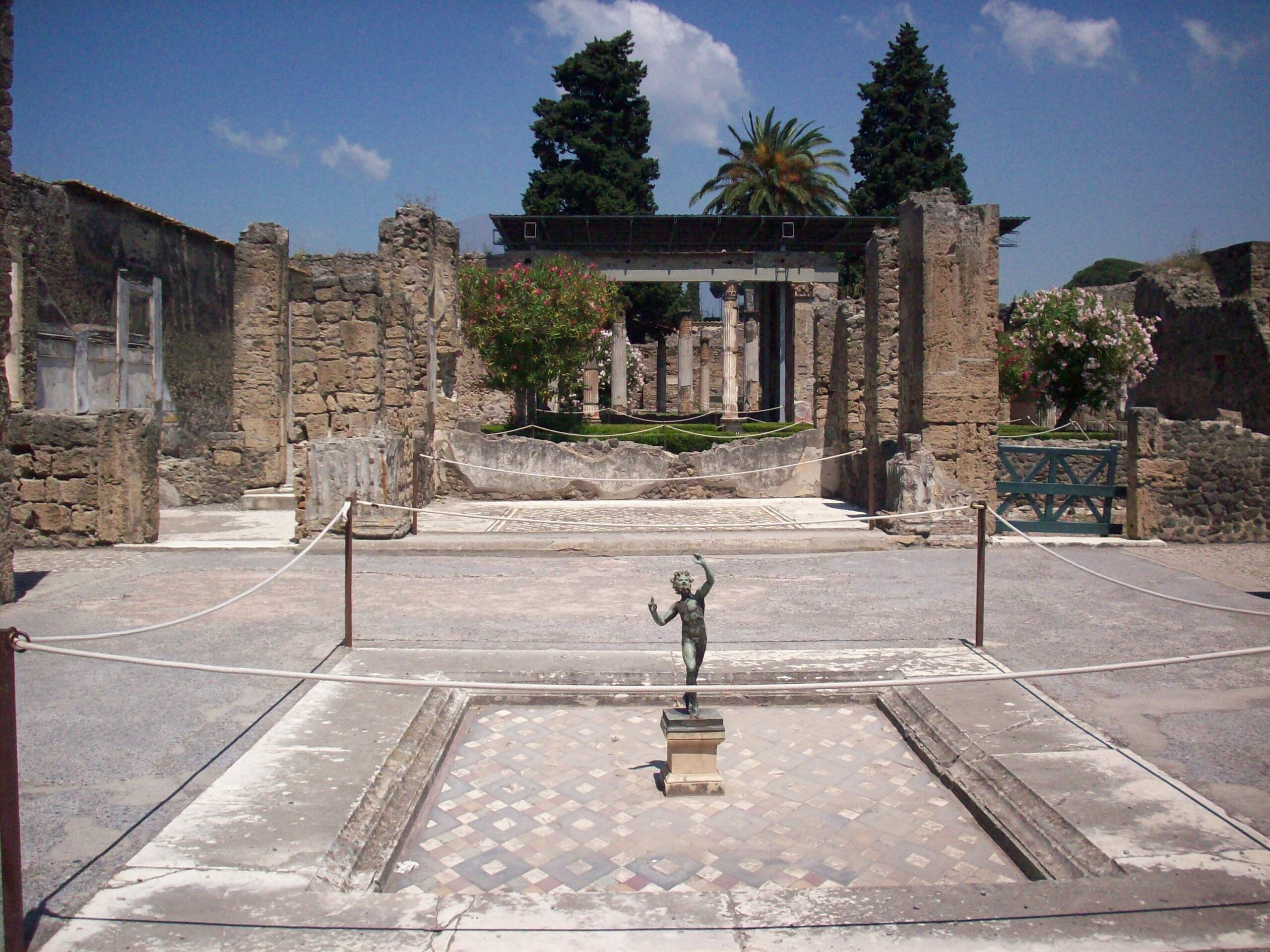
The town is divided up into insulae or islands, regular blocks of houses. Some insulae were occupied by a single great house of which the best known is the House of the Faun with the statue of a dancing fawn still in place to greet the visitors.

This was built originally in the 2nd century, in the ‘Samnite’ period which was in many ways the grandest period of the town. There were two entrances: one a grand public entrance, the other for domestic life, though both were proper atriums with a central courtyard with the roof sloping down to form a rainwater pool at the centre.
Behind it there were two grand peristyles: the first was the smaller being surrounded by rooms with facilities for dining, but behind it was a larger peristyle courtyard with a colonnade running round the outside.
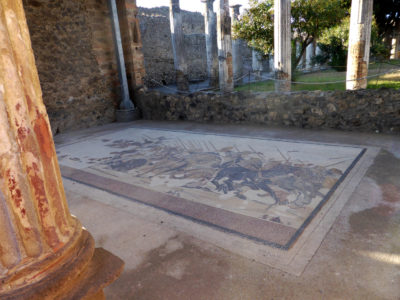
Between the two was the most famous mosaic from the Roman world: a picture of Alexander fighting the Persians at the Battle of Gaugamela. It is formed from over a million tesserae, and is presumably a copy of a famous painting made at the time. The painting has perished, but the mosaic, now in the National Museum at Naples, is the finest representation of what must have been one of the grandest paintings in antiquity.
This is the largest single house in Pompeii, and if any house is to be the dwelling of a ruler, this is it. But it is a very odd house. It was built in the second century BC and preserved with few alterations to the time of destruction when it must have been over 200 years old. The two peristyle courtyards would have been splendid for display, but the residential arrangements are on the small side – no grand dining room but a small dining room and even smaller baths on the eastern side of the smaller peristyle. It would have been good for grand occasions — but not a house to live in.

There are two main features in the grand Roman house. The first is the atrium, which is the grand entrance hall. This is square with the roof sloping inwards to the centre where there is an open water feature which catches the rain water, and in the best houses it then drains away to underground storage tanks, so there is always fresh rainwater available. It makes a grand central feature with rooms opening off on all sides.
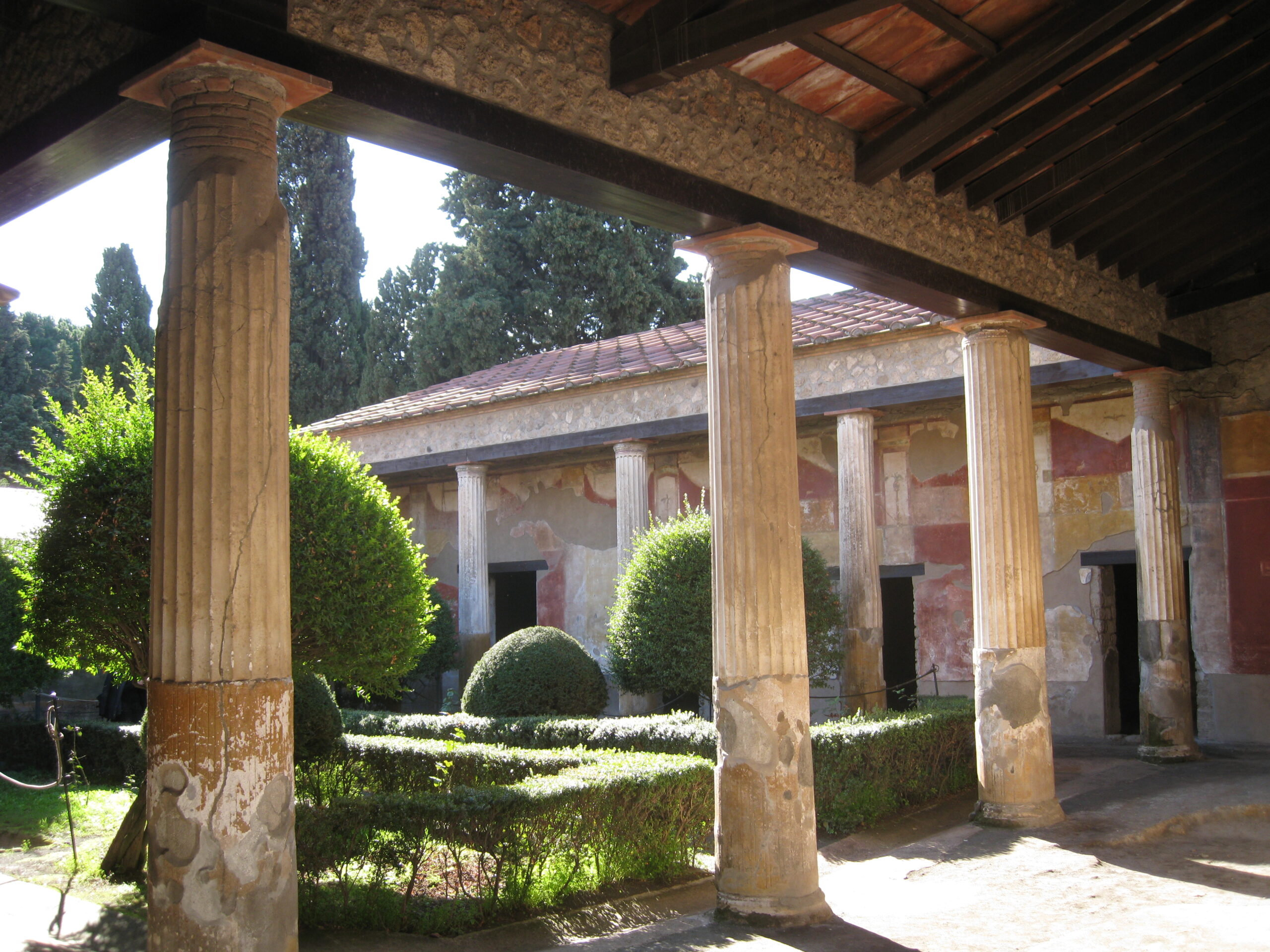
But in the grandest houses there is also a garden in the rear known as the Peristyle, a courtyard surrounded by columns, almost like a mediaeval monastic cloister. The grand dining room often opens out onto the peristyle, so all your guests can see the grandeur of your garden.
Insula of the Menander

But what did a typical grand house in Pompeii look like? One of the best examined is the so-called House of the Menander – named after a portrait of the poet Menander found in the house. This was originally excavated in the 1930s, but by examining the internal details it is possible to work out its building history from the 4th century BC onwards.
InsertS91a medium size with caption: ”The layout in the 4th century BC with a grand house at the centre and two smaller houses in each corner.”

This began in the 4th century BC when the first house was built. This was a fairly grand house at the north with two smaller houses at the corner, but otherwise the whole block was empty presumably forming a large garden.
It was not until the 2nd or 1st century BC that it was expanded. A second grand house known as the ‘House of the Lovers’ with some splendid mosaics was assembled in the bottom corner with a grand peristyle courtyard and a small set of baths leading off it. The rest of the block was then filled out by the original house with a large peristyle courtyard at the centre, a grand dining room on one side and a kitchen apparently on the other.
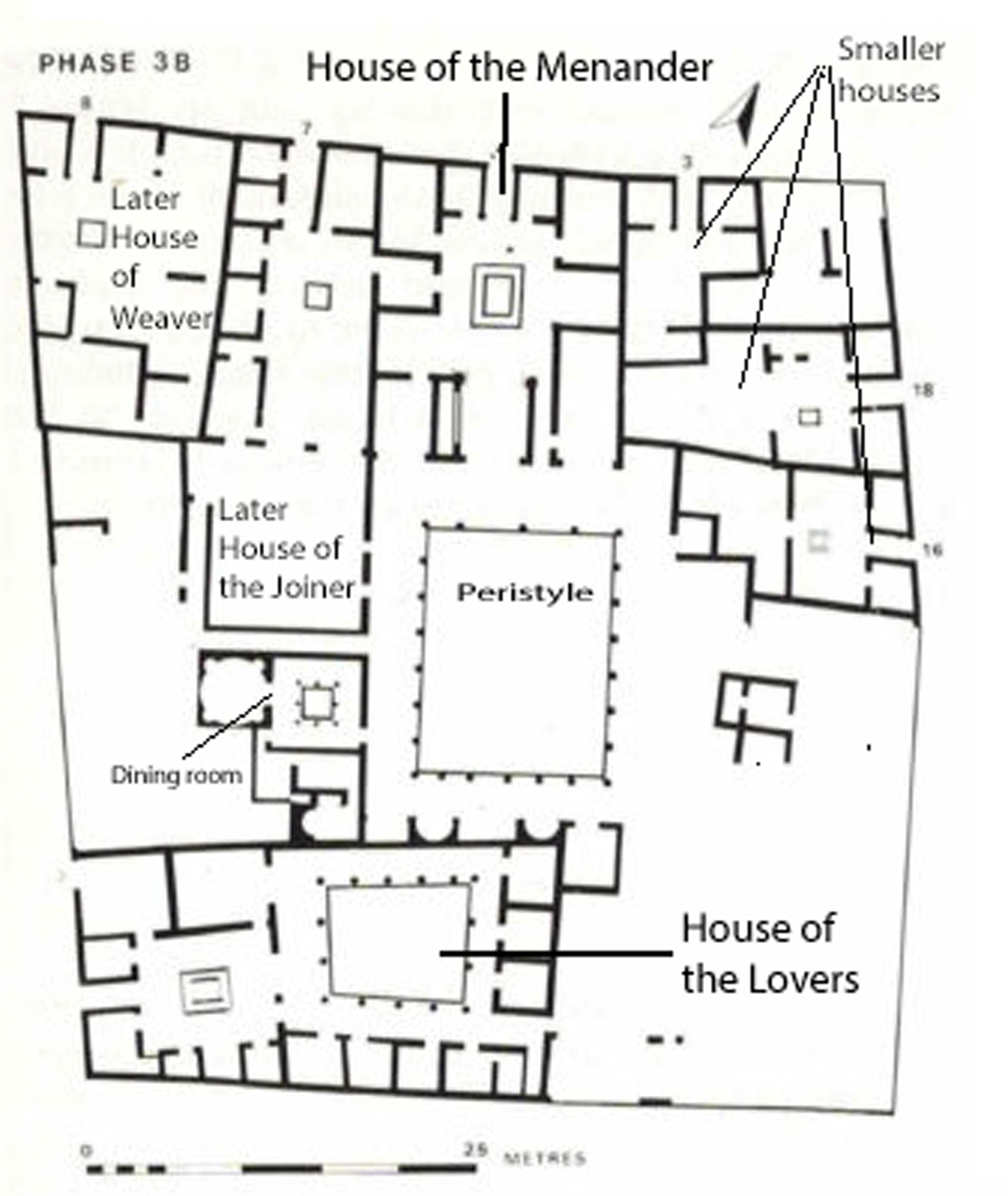
But note how many other smaller houses were there too. In the top lefthand corner No.8 is the house that eventually belonged to a weaver, while adjacent to it No.7, long and narrow, was eventually the workshop of a joiner. In the right corner three further houses No.3,16, and 18 were substantial dwelling houses.
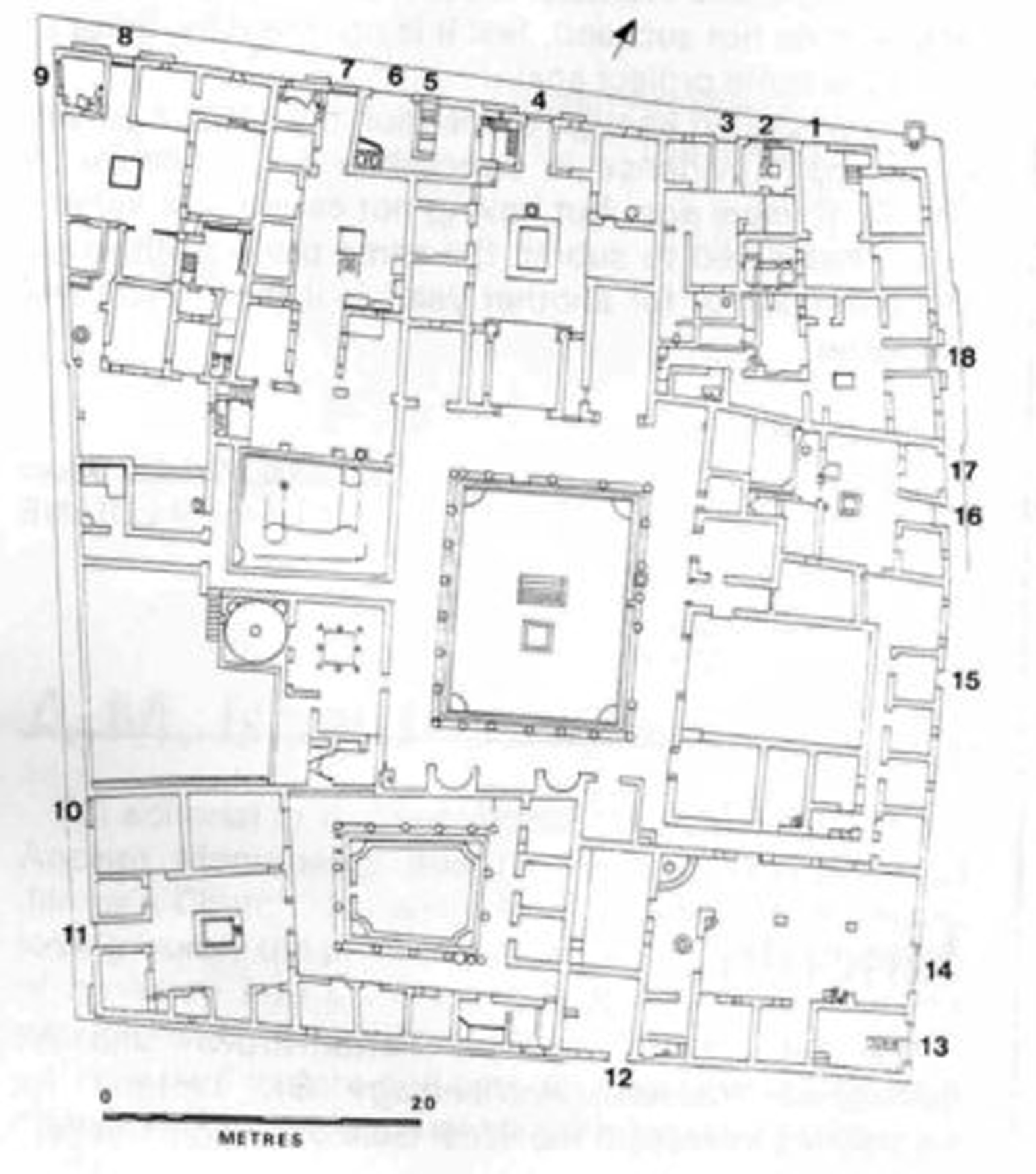
In the final stage at the time of the eruption the whole block had filled up. It is fascinating to see that the exterior rooms of the house were all monetized and were let out for money and thus individual rooms were let out for a joiner, a weaver, two cafes and apparently a fullery, or clothes cleaning establishment. Indeed one of the rooms constructed above the west side of the atrium is thought to have served as a brothel – a vivid comment on the changing character of this old aristocratic quarter.
No other town in the Roman world, and indeed few other towns anywhere can compare to Pompeii as the example of how an ‘ordinary’ town really worked. There is no grand palace, no castle for the ruler of the town. Instead the town ran itself, the leading citizens proudly contributing to the buildings of the town: the amphitheatre, the buildings round the forum, the baths and the temples; while their own houses displayed their hospitality. It is the workings of the market economy in all its variety, forming a wonderful exhibit of how the Roman world worked at its height.
On to: How Rome built its empire: what was it like to become Roman? We look at the differing cases of Spain, Gaul (France), Germany and Britain