The Barbarians
The Barbarians
But if inflations played a major role in destroying Roman stability in the third century, there is also the other cause ascribed by Gibbon, that is the part played by the barbarian attacks from without, that is outside the Empire. There were two in particular, from the Germans in the north, and the Persians in the east.
In Europe, there was increasing pressure from the Germanic tribes. Inside Germany, the Germanic tribes themselves had undergone major changes, moving away from the comparatively simple tribal organisation of the first century to a more efficient chieftain organisation, with the emergence of chiefs willing sometimes to act as mercenaries for the Romans and sometimes to act as invaders for themselves

In the middle of the century in particular there was heavy raiding across both Rhine and Danube. In 259, the Alamanni, whose name is preserved in the French name for Germany – Allemagne – raided widely: in 267 Goths raided the Balkans and Greece, and even Athens was sacked. Most notably of all, in Germany itself, the upper German frontier or Limes was lost and the regular German defence took a much longer route down the Rhine to Switzerland and then along the Danube from Switzerland to the Balkans
A major cause of instability were the armies themselves and particularly their commanders. In German, the Balkans and in the East there were powerful armies, often consisting of several legions, and their commanders were in an invidious position. Often, hearing of the chaos in Rome, they would be tempted to march off to make themselves Emperor. Sometimes they would be recalled to Rome, but fearing the worst, they would decide it was safest to get their troops to proclaim them as emperor and to march on Rome. Sometimes you would be successful and you would become emperor. Sometimes you failed and were killed in the attempt. And twice, once in Gasul, and the second time in Britain, the army commanders proclaimed themselves Emperor of their own regions, Gaul, and then Britain.The Gallic Empire
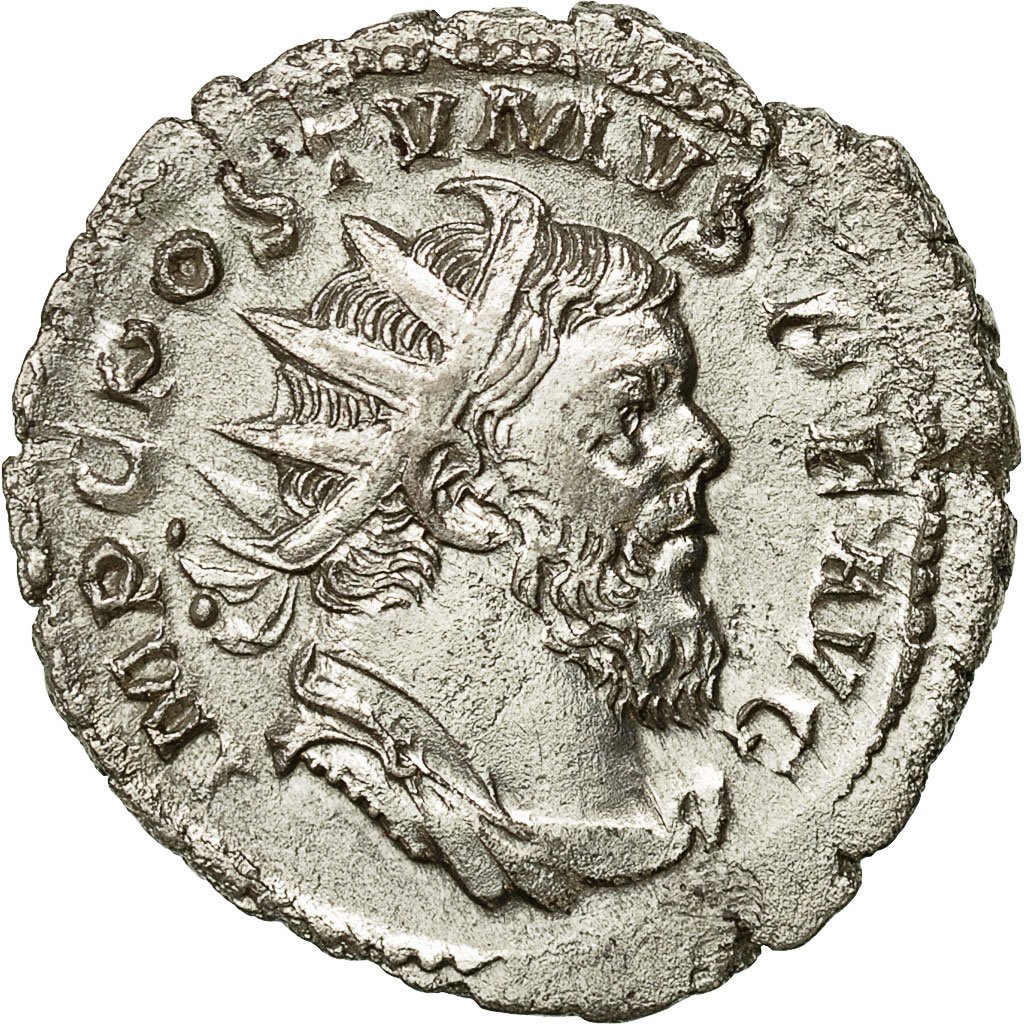
The first breakaway empire was that in Gaul. It began in 260, when Postumus, who was the commander of the legions based in the middle Rhine at Cologne, was recalled to Rome and therefore got his troops to proclaim him emperor. However instead of marching on Rome he remained in Gaul and set up a parallel institution with a senate and consuls, indeed he himself was elected consul several times.
At first the Gallic empire went well, and Britain and Spain also joined. However after nine years Postumus was assassinated, and though the Gallic empire staggered on for a further five years under different would-be emperors, by 274 it collapsed completely and Gaul and Spain and Britain once again rejoined the Roman Empire.
Britain and Carausius
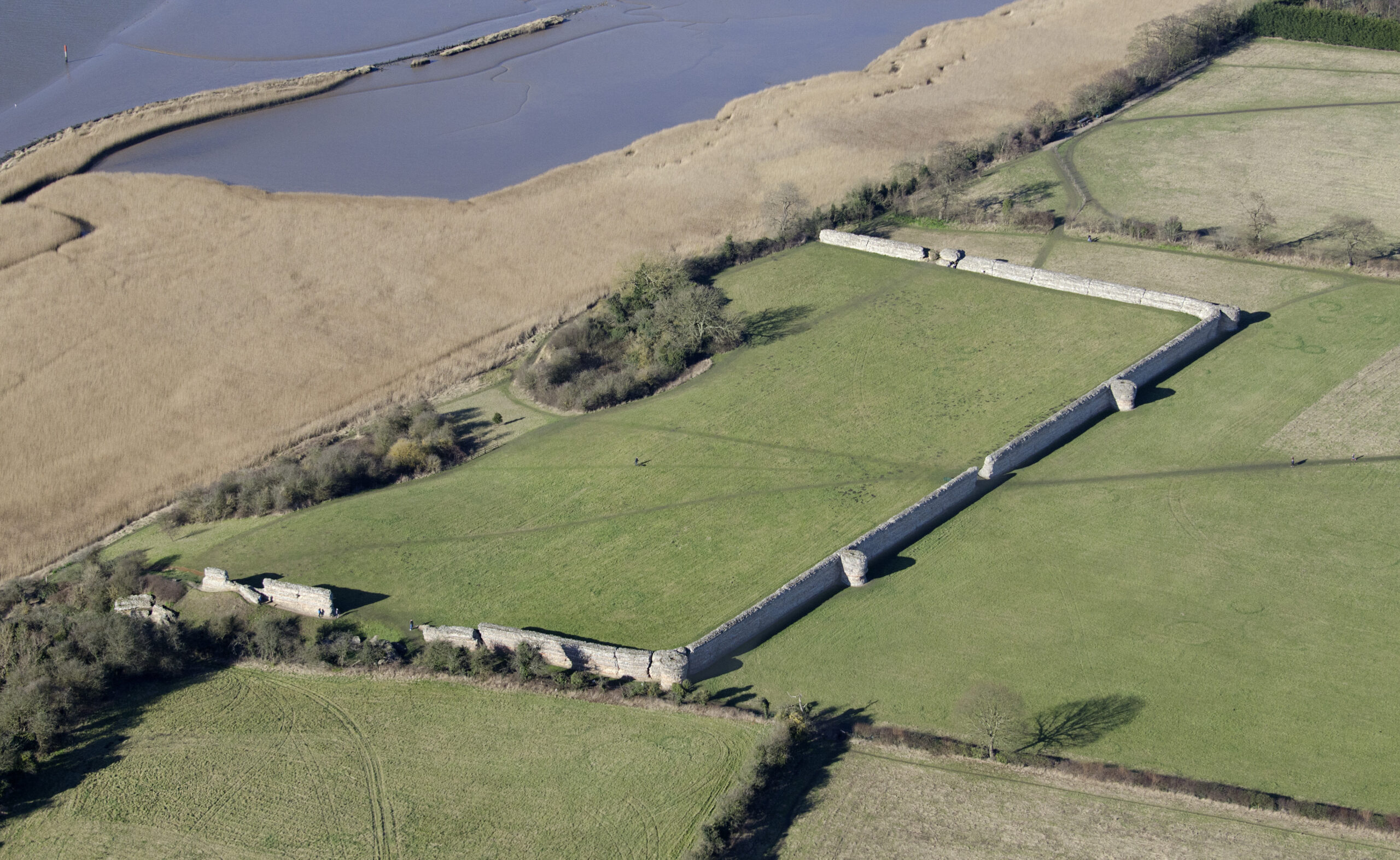
However twelve years later, in 286 the same thing happened and Britain broke away to form a British Empire. For some time Britain had been plagued by German pirates, and a set of forts was established along the southern and eastern shores of Britain, which became known as the Saxon Shore Forts, which are only known in detail from a late fourth century document.

The task of protecting Britain against the German pirates was centred on the navy, which was an entirely different organisation from the army, with headquarters at Dover. The commander of the Classis Britannica, the British fleet, was Carausius and in 286 he broke away and proclaimed himself Emperor of the North.
he story of Carausius’ empire has been reconstructed from the coinage that he issued, much of it in high-quality silver. A very interesting coin shows three emperors. Carausius seized power at the same time as Diocletian was establishing himself as a new and powerful emperor. He decided to split the empire into two halves each with a senior emperor and a junior ruler called a caesar. He appointed Maxentius as the Caesar of the West with the task of bringing Britain back into the empire. But Carausius thought that he should be included as a third emperor, and thus the coin shows Diocletian, Maxentius and Carausius all as emperors. Clearly Diocletian would have nothing of this, but the coin appears to show Caraucius’ forlorn attempt at making himself respectable.
Even more interesting perhaps are the coins which appear to contain tags from the Roman poet Virgil who had existed 200 years previously. The most interesting of them show the tag Expectate veni (to be translated as come (veni) O long-awaited one). A tag that was later taken up by the Christians who claimed that Virgil by a miracle was able to call for the coming of Christ.

Indeed Guy de la Bedoyere has argued that the mysterious letters RSR found on some of the coins stand for Redeunt Saturna Regna (Saturns’s kingdoms – a Golden Age – are returning) which is a well-known tag from Virgil’s Eclogues. It is amazing to think that the concept of the Roman Empire was so engrained that those who broke away wanted to emphasise that they were not breaking away from the Roman Empire but re-establishing it properly.
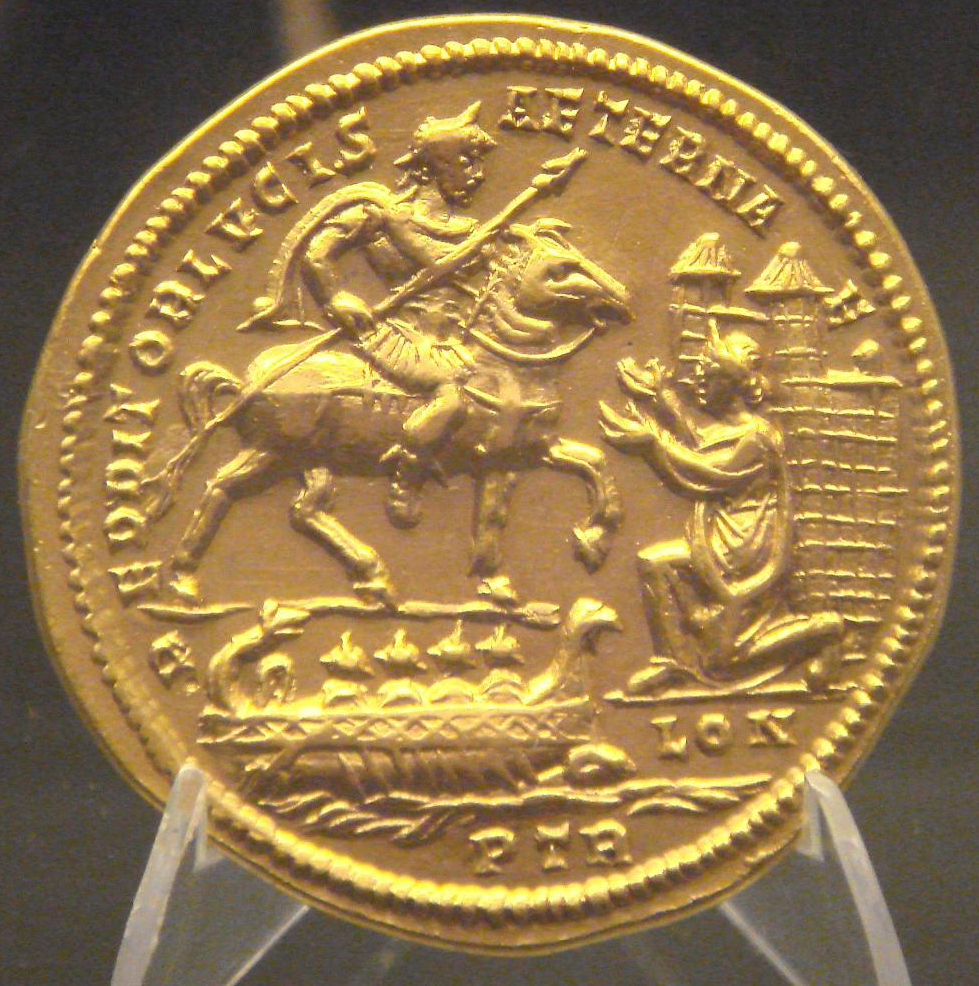
However in 293 Carausius was assassinated by his finance minister Allectus. However Allectus only survived three years until he was defeated. Central control in Rome was being re-established under Diocletian and an extremely competent Caesar had been appointed as Ruler of the Western Empire known as Constantius Chlorus, better known as the father of Constantine the Great. He assembled a powerful force, invaded Britain and defeated Allectus killing him in the battle. The restoration of Roman power was celebrated in a medallion discovered at Arras, showing a woman on her knees, representing London, welcoming back the victorious Constantius.
The Persians
But from the Roman point of view, Germany was the lesser threat: the major threat came from the East, from Persia. Here a major new dynasty arose, the Sassinids, who ruled from 229 to 651. Persia had had its ups and downs ever since the great days when the Persian army almost overwhelmed the Greeks: the Achaemenids were conquered by Alexander the Great, but his successors in their turn were replaced by the Parthians.

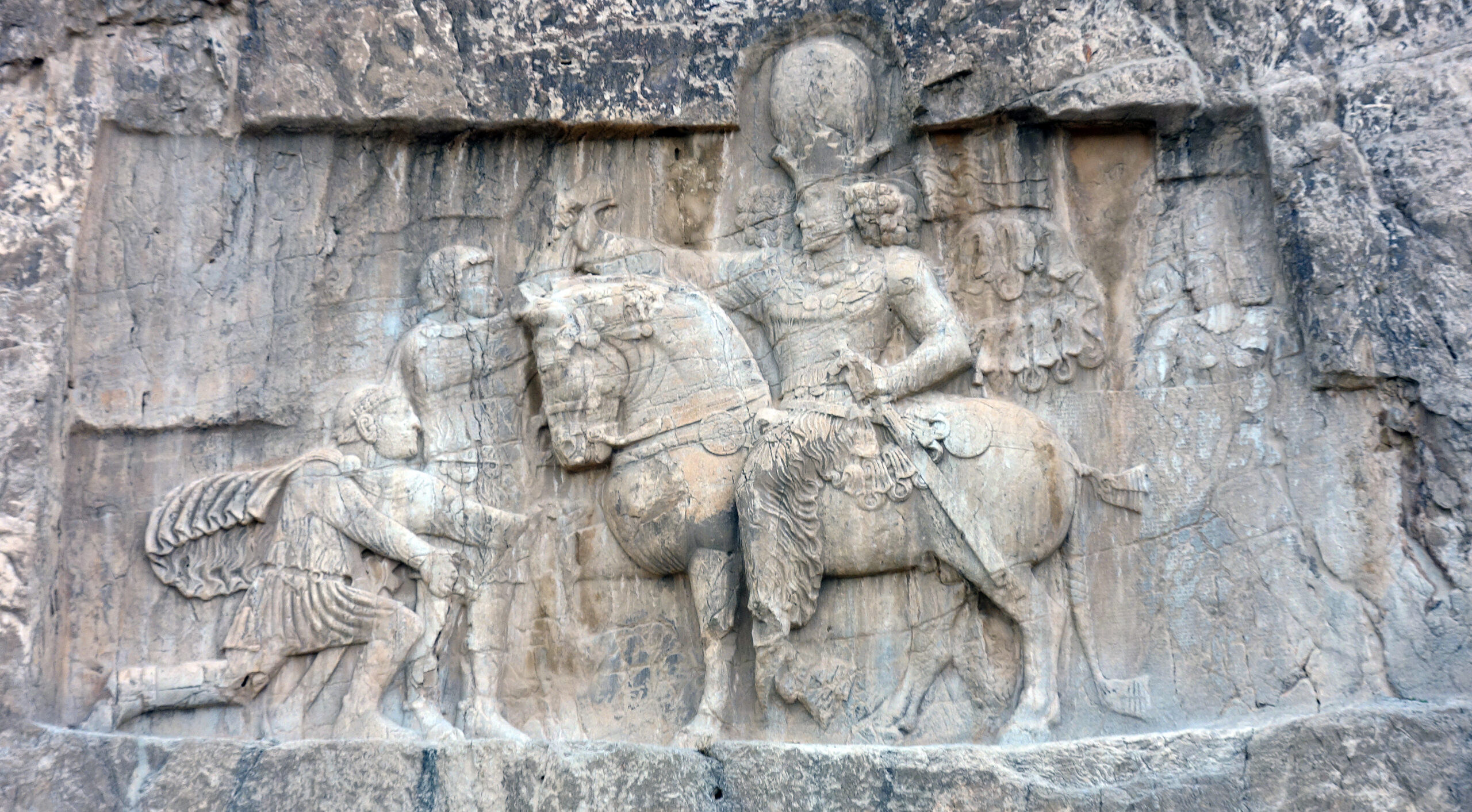
However the big change came with the rise of the Sassanians, who under their great ruler Shapur (c.240 – 270) , expanded enormously. Military they were extremely successful and in 260 they even succeeded in conquering and capturing the Roman emperor Valerian, and held him captive for three years until his death, using him, according to a late Christian source, as a footstool for Shapur when mounting his horse.
The Sassanians continued to be a major force in the east until their conquest by the Islamic forces in 651: indeed, it can be argued that much of the Islamic art and culture came from the Sassanians. The original Islamic religion rose in the Arabian desert, where the mobile tribesmen with little time for arts and culture. But when the Moslems conquered the Sassanians, they took over their sophisticated art and culture, and much of what we consider to be Moslem culture, is in fact Sassanian.
Why was the Third Century
But all these military threats on the borders meant that more troops were needed, and more troops meant more money to pay them. And the money paid as bribes to the barbarians drained the Roman empire of its gold. It is said that more Roman gold coins of the third century have been found in Denmark than have been found in Rome itself.
Nevertheless much of the original social structure that had given Rome its strength still remained intact. True, the structure of command in the army had changed. Whereas before, provinces were largely commanded by senators drawn from a largely hereditary senatorial class whose military knowledge tended to be somewhat amateur and who were often stronger at administration than war, in the third century they tended to be replaced by equestrians, that is knights, who were mostly professional soldiers who had risen from the ranks – or whose father had risen from the ranks. This in its turn lead to problems in that they were rather more inclined to rebel when things went wrong and had little of the loyalty of the old senatorial class to the concept of Rome and the Roman emperor.
The position of the soldiers too was changing. Previously being a soldier had been something of a good career move. The auxiliary soldiers served 20 years but at the end of your time, you were demobbed with a formal diploma and became a Roman citizen. Thus the ranks of the Roman citizenship were constantly replenished by retired soldiers, often originally recruited as barbarians in other parts of the empire: at the end of the third century, a succession of strong emperors (Aurelian, Diocletian and Constantine) all came from the Balkans, clearly a breeding place for strong and competent men. However in 212, Caracalla had declared that all free men in the Roman Empire were to be Roman citizens (the Constitutio Antoniniana). According to Dio, this was mainly done to increase the tax base, as only full citizens were liable for the whole range of taxes, but inevitably it also meant that service in the Roman army was not as valued as it was before and paradoxically this apparently benign improvement meant that Rome began to lose some of its cohesion. The Roman empire survived, indeed in some respects it was to become even richer in the fourth century. But inflation, and the social changes that were taking place, were beginning to sow the roots of its ultimate decline and fall.
On to Diocletian