How Diocletian fought inflation – and lost
Diocletian was the first of a long line of rulers who have attempted to deal with runaway inflation by fixing prices. In 301 he promulgated his famous Price Edict, fixing the maximum price of both goods and services throughout the Empire, prefaced, as is usual when governments cause inflation by increasing the money supply, by a stern sermon on the wickedness of merchants who kept putting up their prices. Its main effects were felt in the east, where a number of inscriptions have survived showing that the edict was displayed in public in all the major towns.
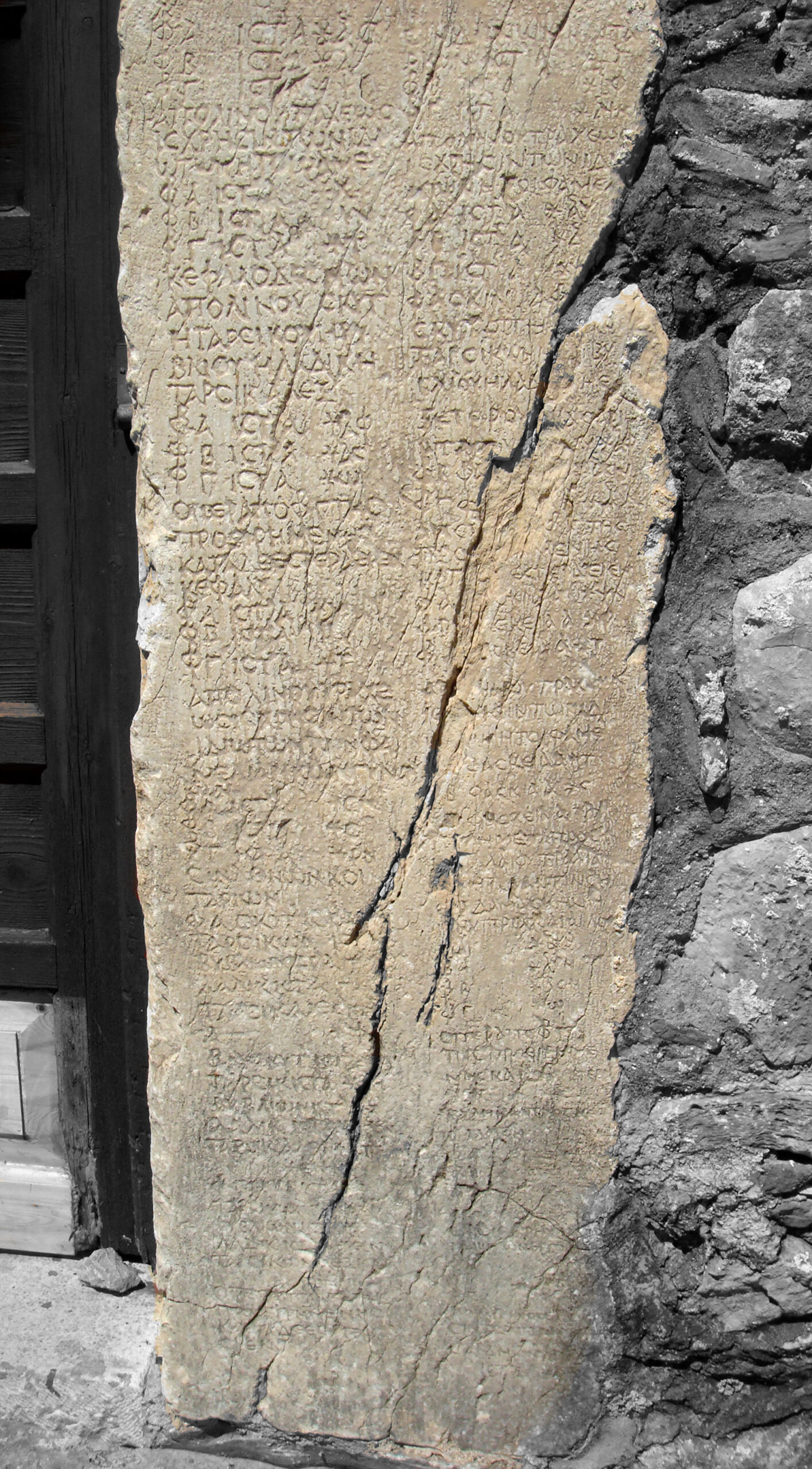
To the modern-day historian, it is a fascinating document. It lists over a thousand articles, both in goods and services, fixing the price in denarii and though we cannot be too certain how much the denarius was worth, nevertheless it provides an unparalleled insight into relative prices in the Roman Empire. For instance, the maximum price for a haircut was two denarii: a haircut today costs me £10, which suggests that a denarius is worth £5. At this exchange rate, a sewer cleaner working a full day with maintenance could not earn more than £125, but a carpenter could earn up to £250 a day. Teachers were paid per pupil, per month: 50 denarii for an elementary teacher (allowing 10 pupils per teacher and 10 months in the year (allowing for some holiday) this comes out at £25,000 a year: however an arithmetic teacher (arithmetic teachers are always hard to get hold of) could get up to £37,500 a year, while a teacher of Greek or Latin literature, or, the trickiest of all, geometry, could earn up to £100,000 a year.
A pint of best bitter – Celtic or Pannonian — cost up to £10 (two haircuts), though Egyptian beer was available for only £5. A bottle of vin ordinaire cost £20, while a bottle of appellation controlee could cost up to £150— rather more than a sewer cleaner earned in a day. And so on for more than a thousand goods and services — it is an invaluable source. It was intended to be enforced with the greatest severity, with the death penalty being invoked for breaches of the edict. One is reminded of a similar attempt at price fixing in the inflation of the French Revolution, where it is said that more bakers were guillotined for breaking the Price edict than were aristocrats for being aristocrats.
Nevertheless it failed to work. We have contemporary evidence of this from the writer Lactantius, who said that sellers refused to put their goods on sale and that scarcity became more excessive than ever, until in the end the ordinance had to be abrogated. Mind you, Lactantius is not exactly a reliable witness: he was a passionate Christian and this is part of a diatribe against Diocletian generally, rehearsing all his sins and shortcomings. Nevertheless this particular sentence does have the ring of truth: papyri in Egypt suggest that very soon after, goods were being sold at prices considerably in excess of those in the Price edict.
The trouble is that prices depend ultimately on the money supply and price fixing only works if it is accompanied by a squeezing of the money supply. However Diocletian did not realise this – indeed it was not until the Tudor period that it was realised that the inflow of silver from America was causing inflation in Spain. But Diocletian expanded the money supply rapidly, possibly in the belief that part of the trouble was that there was a shortage of money and that he was making good the shortage — a frequent fallacy of governments. In his monetary affairs, he largely followed the reforms begun by his predecessor Aurelian, introducing small amounts of well-struck gold and silver, though the amounts were so small that they had little effect. However the real shortage was of ready money – cash to buy things in the marketplace, so he hugely increased the amount of a new coin called the nummus (or follis), which was basically a copper alloy coin with a silver wash to make it look as if it were silver. A huge number of these were produced which had the effect of sabotaging all his efforts at stabilising prices. But Diocletian’s Price edict, even though it was all in vain, remains a most remarkable and valuable insight into prices in the Roman Empire.
TC
On to Constantine