How much did it cost to build a temple?
The Epidaurus Inscriptions
How much did it cost to build a Greek temple? A good answer can be found at Epidaurus where the building accounts were carved on stone and have therefore survived.
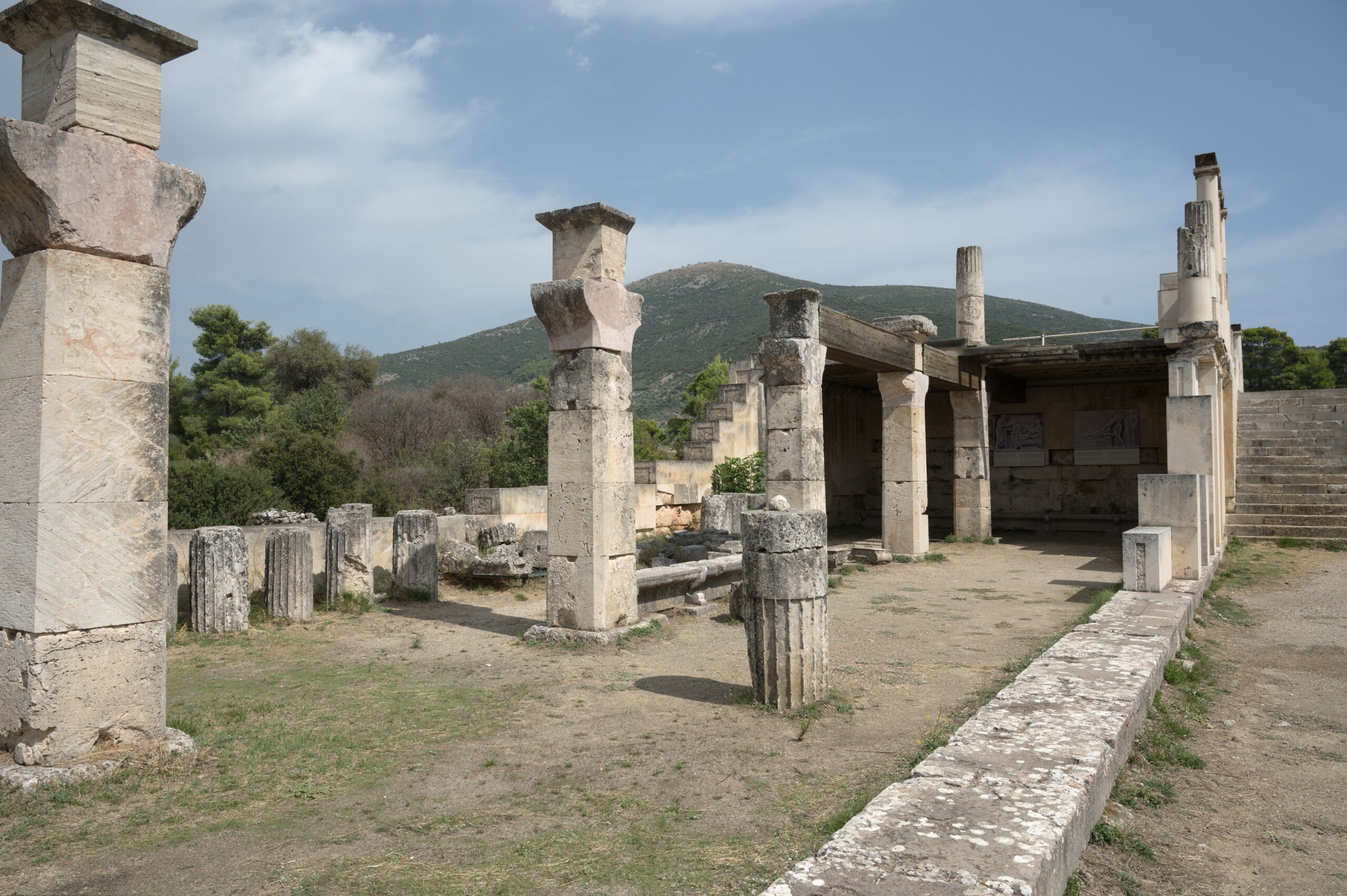
Epidaurus was the best hospital in Ancient Greece, in other words, it was the sanctuary of Asclepius, the god of healing. Thus the money rolled in and they built one of the biggest theatres in Greece, though the accounts are for the temples and ancillary buildings which modern visitors rarely see. The most important building was the dormitory where you went to sleep and the God visited you in a dream and told you how to get cured.
The story was told by Alison Burford in her book on The Greek Temple Builders at Epidaurus published in 1969. Here I give some examples of payments. I have converted the financial amounts into modern currency on the basis that a drachma is one day’s work, let us say £100 – or dollars, or Euros (double if you are an American).
The main temple cost around 23 talents, or around £140,000 in modern money. Surprisingly however the most expensive single item was the great gold and ivory statue of the god which cost some 50 talents, or some £300,000.
The biggest single contract was paid to Lykios of Corinth who undertook the quarrying and carting into the sanctuary of stone for the whole of the Temple’s outer shell for 640 drachmas (£64,000),
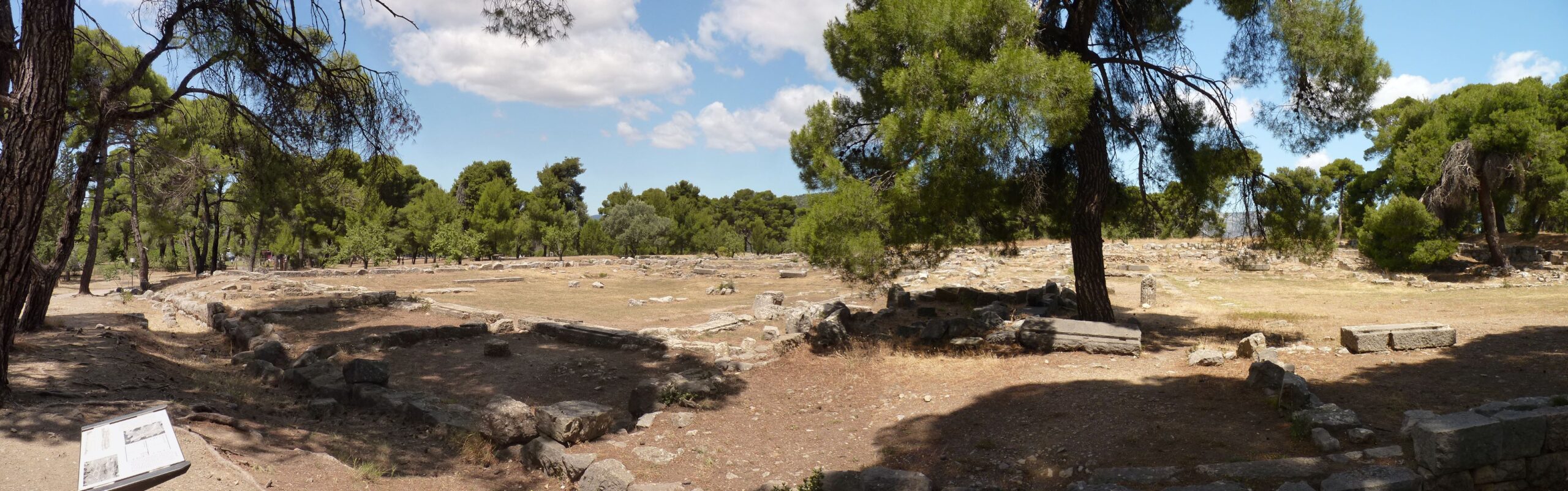
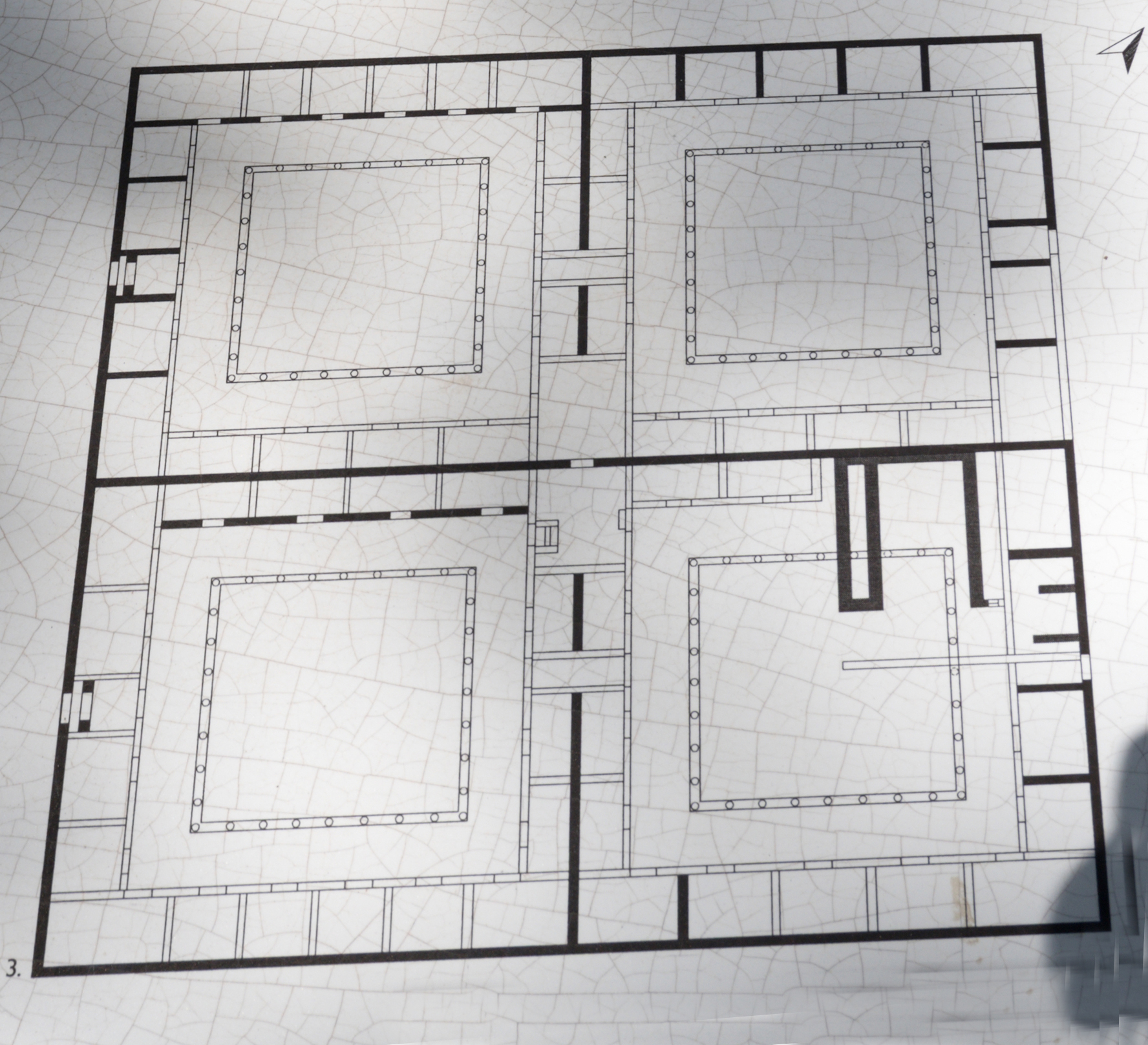
A number of other buildings cost around three or four talents, but the Katagogion, the hotel, in area the largest building on the site, may have cost around 5 talents, or £30,000.
Alison Burford also notes the number. of the number of payments to heralds. and suggest this is because Epidauros, being a comparatively small town did not have sufficient specialist artisans, so heralds were sent off to Athens or Corinth to act as recruiting agents.
It is perhaps of interest to see some individual smaller payments:
To Aristaios, for work on the treasury, 6o dr.(£6.000)
To Antiphanes, for rings and bolts for the grille, 68 dr. (£6,800)
To Pasithernis, wages for (work on) the pediment sculptures, 12 dr. (£1,200)
To Xenon for lead, 12 dr. 1 ob.2ch. (£1,220)
For carting, 1dr‑ 5 ob. 8 ch. (£190)
To the herald for going to Corinth, 6 dr.(£600)
To Hektoridas, for a model of the painted decoration, on the lions’ heads, 16 dr. ½ ob.(£1610)
To Aristaios, for bringing in timbers, 1 dr. 5 ob. (£180)
To the messenger, 2 ob.(£200)
To Aristalos, for temporary cover, 2dr.(£200)
To Kleinias, for white‑washing the door panels, 1 dr. £100)
To Aristaios, for carrying the door‑panels, 4 ob. (£80)
Alison Burford also compares the records of the Persian building of the Palace at Susa and the Greek building accounts for the Erechtheion at Athens, which was near completion in 408/7 BC. The Persian inscription by Darius reads:
This is the palace which I built at Susa. From afar its ornamentation was brought; the earth was dug deep down until I reached rock-bottom. . . . The cedar was brought from Lebanon, the Assyrians brought it to Babylon, and from Babylon the Ionians [Greeks] and Carians brought it to Susa. . . . the stone pillars were brought from Elam; the craftsmen who dressed the stone were Ionians and Lydians. . . . At Susa here a great work was ordered; it turned out very splendid. May Ahura Mazda protect me and Hystaspes who is my father, and my land.
The Athenian inscriptions are very different:
Salaries. To the architect Archilochos of Agryle, £3,600 (36 dr). To the under-secretary Pyrgion, £3,000). . . . To the encaustic painter Dionysodoros living in Melite, for treating the kymation on the inner epistyle, at 5 obols (=£90) per foot, 113 feet, we gave out in addition to what he had before, his guarantor being Herakleides of Oe, £4500 (44 dr. 1ob). . . . For fluting a column, . . . Ameiniades living in Koile, £1800, Lysamas, £1800, Somenes (slave) of Ameiniades, £1800, Timokrates, £1800 (18 dr).
These inscriptions display well the differences between a non-market – I would say barbarian – society, where the builders remain anonymous, with the market economy of civilized Athens.
On to How the Greeks Invented Drama