
The Altar of Peace

Augustus was a great builder. According to Suetonius, he found Rome brick and left it marble. Much of his work however was reorganising and rebuilding – he rebuilt three major aqueducts. His biggest single new building was the forum of Augustus which he erected next door to the forum of his predecessor Julius Caesar, although today both are rather overshadowed by the forum of Trajan built a century later.
He also built three major temples, including the large temple of Mars, but many of the new buildings in Rome were either done in the names of his family or done by wealthy citizens, encouraged by Augustus. (Interestingly, he rather boasts about this in the Res Gestae, his autobiography, i.e. he boasts about his own modesty. This to me rather typifies Augustus who was inside a mass of contradictions which he managed to sort out on the surface. Yes, he was modest, but yes he boasted about his modesty). However there is one particular building which was very much his own, the Ara Pacis, or the Altar of Peace.
This is a comparatively small building erected in the Campus Martius – the field of Mars – at what was then the edge of the city. The dedication is significant – the altar of peace. Of course Syme and his followers will say that this is all purely propaganda and point out that Augustus’ reign was occupied almost continuously by war in one province or another. But I think this view lacks a comparative viewpoint – did any of the pharaohs in Egypt ever erect a temple to peace? Indeed is there any earlier temple to peace anywhere in the world? This was Augustus’ message. This was what he wanted to believe and the reason why he was so popular, and why henceforward the Romans themselves talked about the pax romana – the Roman peace.

The temple itself has been splendidly reconstructed of hundreds of small fragments, so one can see it as originally intended. From the front a flight of stairs led up to a small single room – it is the sculptures on the outside that are significant. The most interesting is a panel at the back which shows a seated goddess. She is probably to be identified as Peace, but the idea of personifying abstract nouns as goddesses was a comparatively new one, but Peace was becoming the central feature of Augustus’ presentation. and indeed the whole structure became the Altar of Peace. The central figure could indeed be identified as Tellus, – Mother Earth – or indeed she could equally be Venus Genetrix, but both these figures were no doubt amalgamated into a new concept of Peace.
The Ara Pacis was built on a low lying part of the Campus Martius down by the river, and it soon suffered from flooding, so eventually it was overthrown and smashed into numerous small pieces which were buried under deep layers of silt. In the 16th century a few fragments were recovered while building the foundations for a later palace and more fragments were recovered in the 19th century. Eventually in the 1930s Mussolini ordered that all the fragments were to be recovered. The foundations of the 16th century palace above were to be shored up and the ground was frozen in an amazing display of the wonders of fascist technology. The fragments were all reassembled and a new site was chosen.

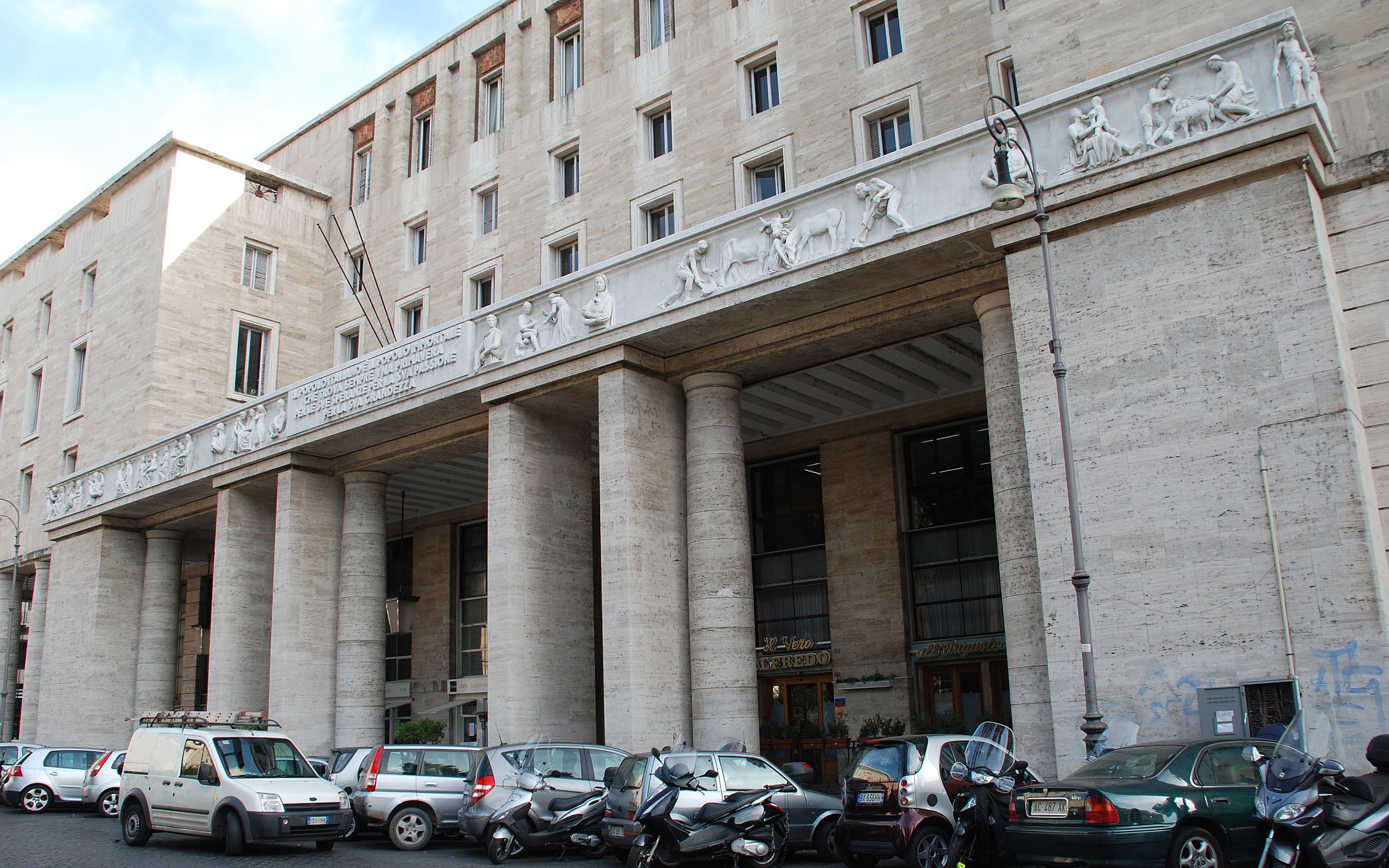
Not far away was another major Augustan site, the Mausoleum of Augustus, a huge circular structure built as a tomb where Augustus and the members of his family were buried. In the Middle Ages it became a castle, but then it became ruined so Mussolini decided to make it the centre of a grand square – the Piazza Augusto Imperatore. Fine buildings were erected round three sides and on the river side, the Ara Pacis was restored and re-erected in a grand new cover building. This was to the design of Vittorio Morpurgo, who was one of the leading Fascist architects until 1940 when Mussolini linked up with Hitler, and it was discovered that Morpurgo’s father was a Jew, so he had to shrink back and take a very low profile. After the War he bounced back and became the Professor of Architecture at Rome University.
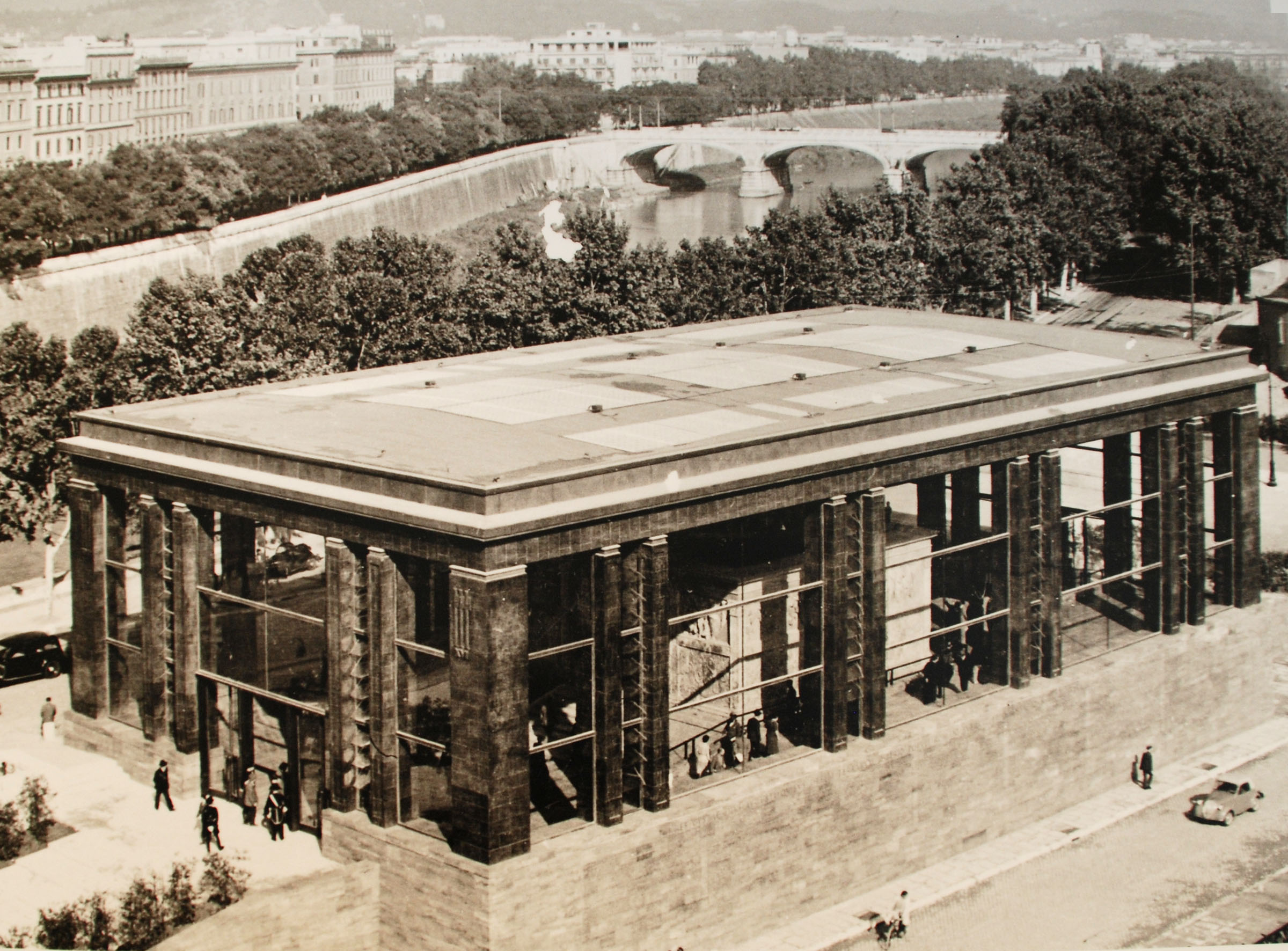
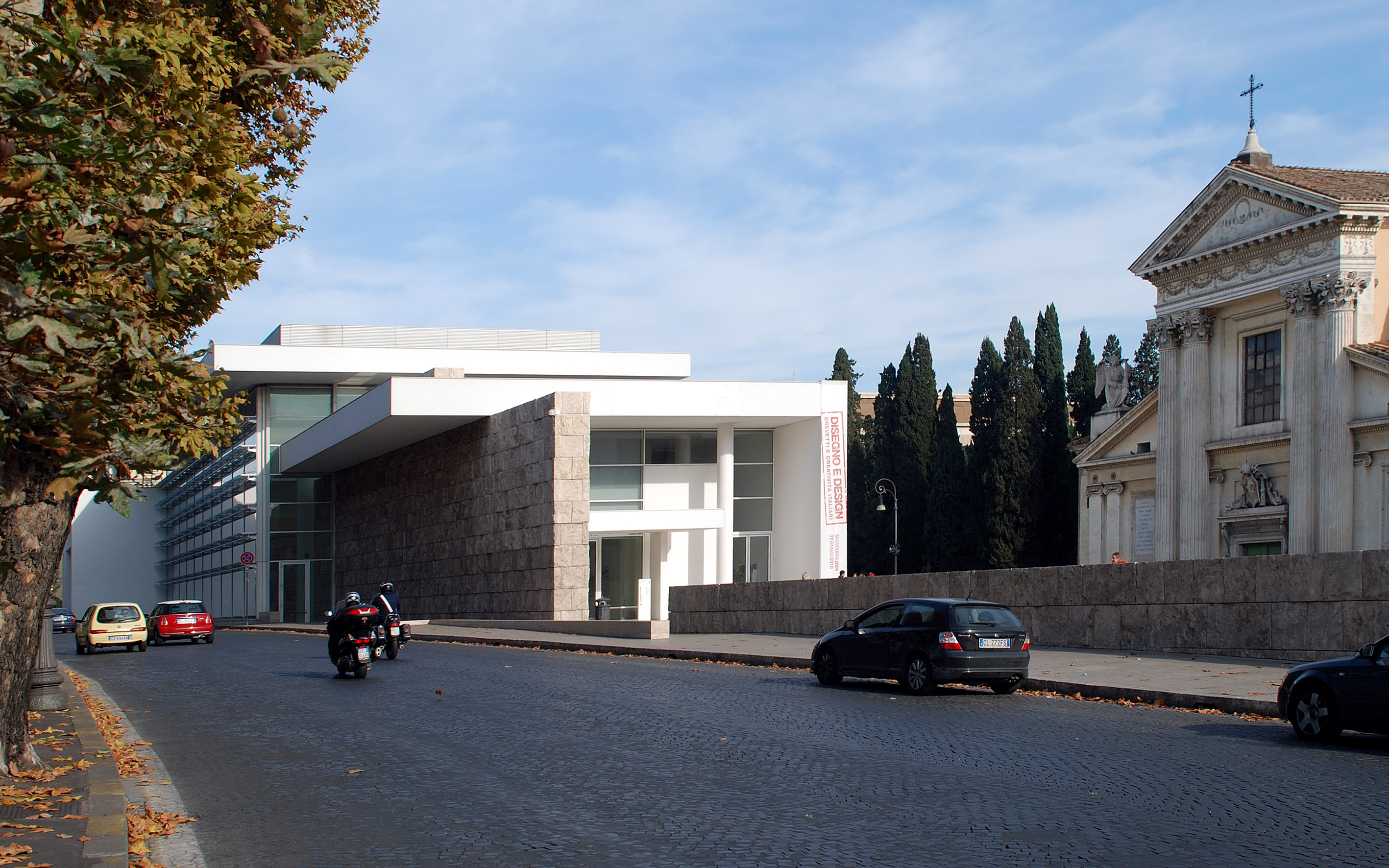
Unfortunately however with the prospect of war ahead the actual cover building of the ara pacis was shoddy in construction and by the 1980s it was leaking badly and needed major renovations. Rome by this time had a communist mayor, so he decided that it was all to be pulled down and be replaced by a grand modern building designed by an Italo-American architect Richard Meier. This too was controversial, and when the communist mayor was succeed by a right wing mayor, he proclaimed that it should all be pulled down and rebuilt again. However, economic reality has intervened – the building does not leak, and it provides a light and airy ambiance for the Roman remains. It seems likely to survive.
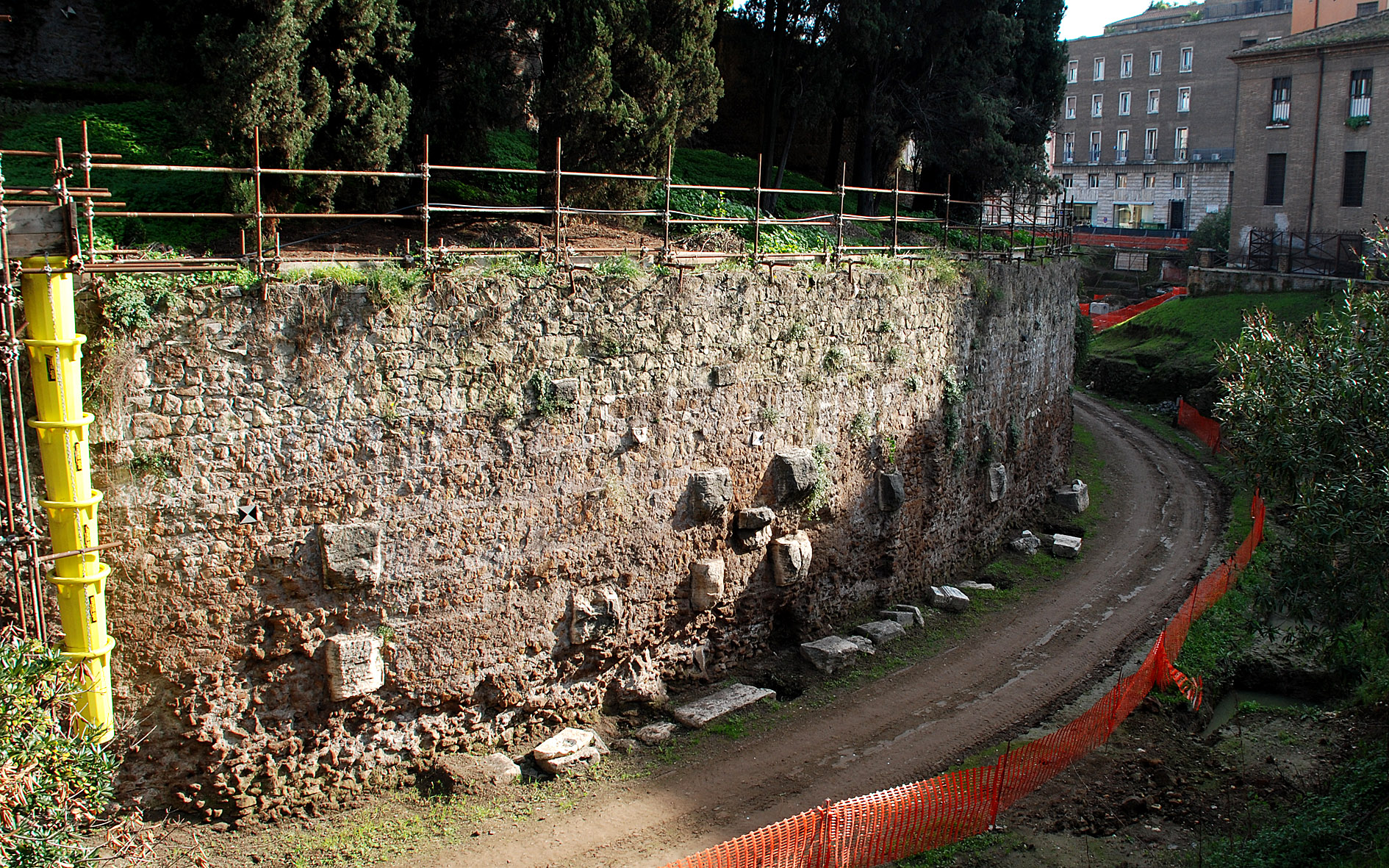 The mausoleum of Augustus, which is adjacent, has also been restored, and the whole complex provides a fascinating monument to the ambitions of Augustus, and the later ambitions of Mussolini, and provides also one of the best surviving examples of fascist town planning,
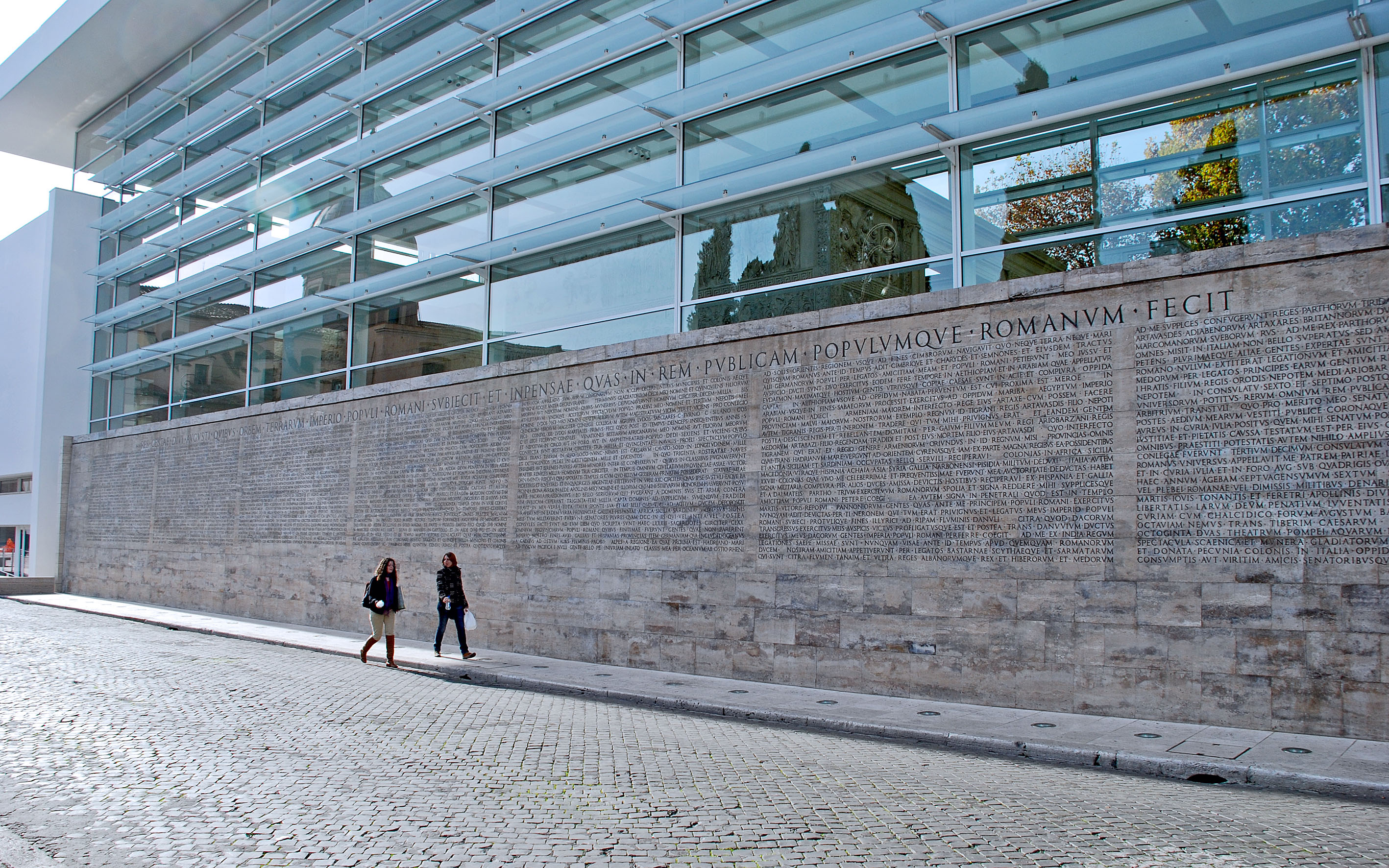
On the side of the modern cover building a copy of the Res Gestae – his autobiography, has been inscribed. The original, the most complete copy, is in Ankara in Turkey.
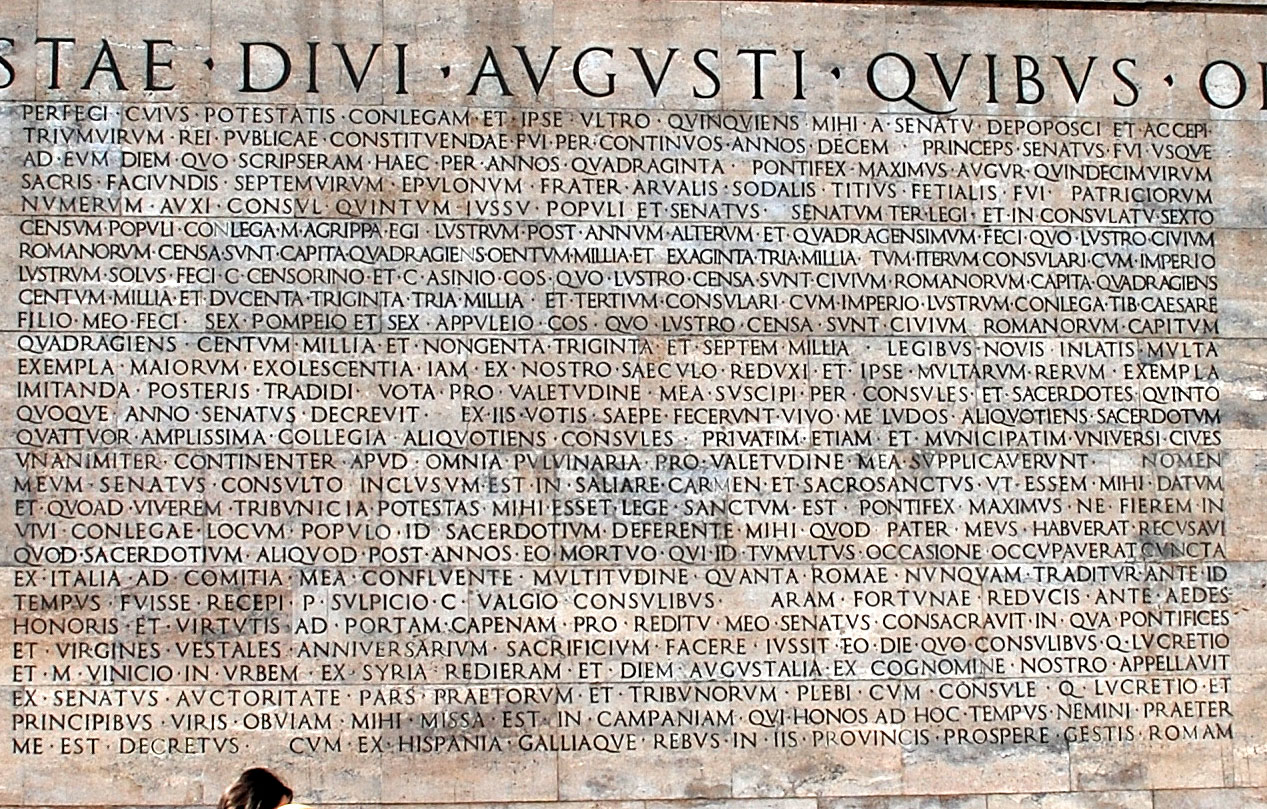
But seeing it inscribed on the wall gives some idea of the length of the inscription. Augustus wanted to record his own version of history and he did so in style and at considerable length. .
on to Augustus’ marriages