Envoi
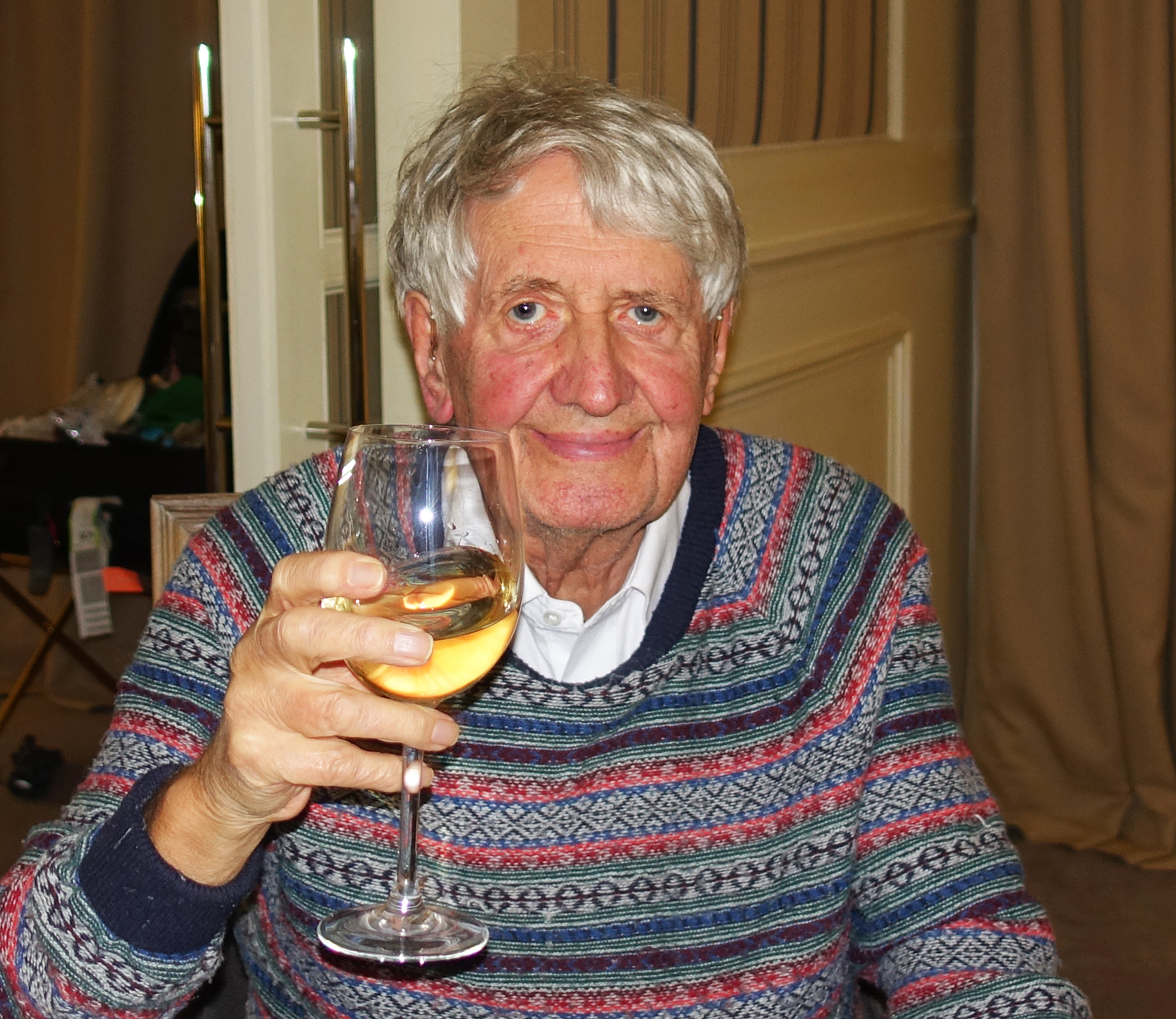 And so we come to the end of our journey. For me it has been a wonderful voyage of discovery, learning how the Greeks and the Romans worked and contrasting them with the Minoans. In the course of my voyaging, I have reached interesting conclusions, indeed I think I can say that there are four themes that have emerged during the course of my voyage;
I begin with a new way of looking at cities. In the early empires, cities were based around the palace or a temple, where the ruler dwelt and ordered the lives of his people, receiving tribute from them and occasionally distributing gifts, and arranging entertainment in the form of processions to glorify the ruler.
The Greeks invented an entirely different type of city, based around an open space which was called the ‘agora’ and became the market place. It is a pity that these market places have not been as well studied as they should be as they tend to be hidden under modern towns, but these open spaces become the heart of the Greek town, where many of the important activities take place. If you visit a Greek town, I urge you to look for the market place and the council house adjacent, and ask yourself how far the temples were adjacent and how far they were separate and form a different centre. Roman towns were similar, though the baths became of increasing importance; and everywhere you should look for palaces, and if you cannot find them you will know you have found a genuine Greek town.
I like to think this can apply more generally. If you want to analyse any society, start by analysing their towns. Where is the heart of the town? Does it lie in the churches, the marketplace, the factories, the town hall, the railway station, the university, the hotels – or the football ground? And how has this changed over time? I would like to think this is a new way to analyse a town, and I recommend it to all guide books and travel writers.
Then I have found myself re-thinking economics. Economists almost universally accept that the common basis of economics, — which very misleadingly is called capitalism – is based on profit and loss. But primitive economics, as still practiced in much of the world today, is based on gift exchange, which is very different. This in fact is the standard story as told by anthropologists, but anthropologists and economists do not talk to each other. I found that my favourite economics guru, Friedrich Hayek, and my favourite anthropologist, Bronislaw Malinowski, were in the 1930s professors at the same university, the LSE. But their views on economics are totally different. Did they never meet and have coffee in the common room?
But this has important consequences, for when we, that is societies of the west, meet with the third world, we do not recognise that they operate in very different fashions, and we should be more sympathetic. We condemn what we call bribery, but this is the very foundation of gift exchange. Yet we practise something very similar ourselves when we pursue prestige. Far too many people buy cars which are vastly more expensive than their basic transport needs, simply to gain prestige. The principles of profit and loss are no way near as basic as we would like to believe.
My third discovery is the most subversive of all, for I would like to challenge the importance of democracy as used today. The Greeks invented democracy, but it did not always work very well. When democratic Athens went to war with oligarchic Sparta, Sparta won. Greek philosophers decided that the answer was the ‘mixed constitution’. They decided that there were three types of constitution: democracy, aristocracy and monarchy, and the Greeks thought that the best constitution should be a mixture of these.
I like to think that our own constitution should be analysed in a similar way , but with different elements, the three most common elements being democracy, the market, and the rule of law. Of these, by far the most important is usually considered to be democracy, and the main feature of our western civilization is usually thought to be democracy.
However we should remember Winston Churchill’s dictum that democracy is the worst of all forms of government – except for all the others. The answer however is that democracy should be blended with the market. The problem with democracy is that the minority lose out. If you have a referendum and 52% vote one way and 48% vote the other way, then the 48% of the population has to accept beliefs that are not their own. Democracy is divisive. The market offers the better answer. If 52% of the population prefers tea and 48% prefers coffee, then 52% have tea and 48% have coffee, and everyone is happy. There are many ways in which the market is preferable. All children are different and we should therefore have many different types of school. All teachers too are different and should be able to offer different types of education. And parents should be able to decide which variety of education is best for their children. Education is a good example where the market would work better than democracy.
There are many problems with democracy: it is divisive, it leads to populism, it pits rich against poor, the efficient against the inefficient, the energetic against the idle. Yes, democracy is needed, to make laws, to define the limits of the market and to break monopolies. But politics should be kept small: it is the market that gives us freedom and we need to reinstate the market in the prime position in our definition of civilisation. And if we cherish freedom, we should cherish the basis of freedom, which is the market.
Finally there is my fourth discovery, for I have come to believe that the market brings about a kinder and gentler society. The earlier palace based societies were in effect totalitarian societies where you are cogs in a machine, which only works when all are bent to the rules laid down by the ruler. In a way, life in such a society can be rather pleasant – you do not have to think, your place is appointed to you, you do your job and you are allocated your rations, you do not think and you are happy. As Marx said, From each according to his ability, to each according to his needs. But with the advent of money, the new concept of choice makes its appearance which can be upsetting to the old order, but is exhilarating to the new world. .
The market offers a much kinder and gentler alternative: your rival may sell more than you do, but you still make a good living. You can find a better niche – innovate successfully, and who knows, tomorrow you may be the top seller. And in any case there is every incentive to meet up with your rivals and plan to enlarge the market as a whole. In the market we have widespread tolerance of different views, many of them interesting, some of them useful, and some completely dotty. Many ideas can be tried out, but money provides the discipline; and if you cannot persuade sufficient of your fellow citizens to accept your ideas, you will go bankrupt, in the spiritual sense if not in the financial settlement. In a totalitarian society if you step out of the party line you will be an enemy. The market is a kinder and gentler alternative.
Here then are some of the ideas that I have sprung from working out my ideas of money and freedom. I have been fortunate enough to enjoy some of them in my life, and I must conclude by thanking the readers of Current Archaeology for tolerating me for so long, and enabling me to write this book. I hope you have enjoyed reading it.
Or,
Or,
8th August 2020